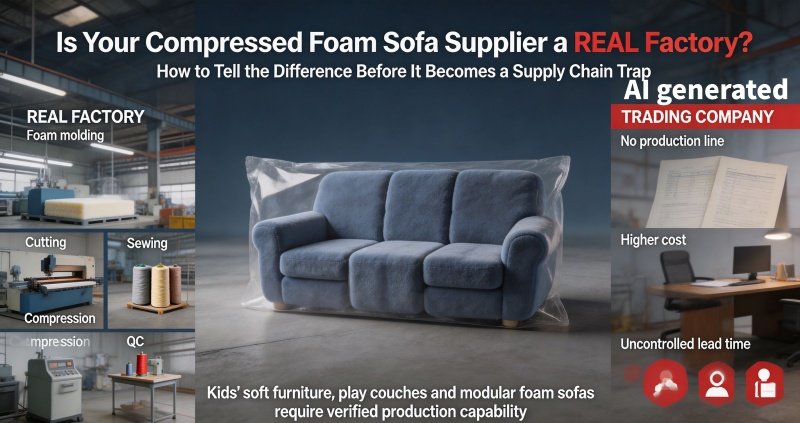
The global demand for kids’ soft furniture, play couches, and modular sofa in a box has exploded. There is strong demand for “sofa-in-a-box” products designed for small spaces.For B2B buyers and international sourcing managers, this booming market presents a massive opportunity—but also a significant supply chain trap. A quick search on B2B platforms will yield hundreds of suppliers claiming to offer the “best factory price” for vacuum-compressed foam sofas.
But here is the million-dollar question: Is your compressed sofa factory actually a factory?
Many buyers are unknowingly working with trading companies, assemblers, or factories completely out of their depth. Here is how to look behind the curtain, verify a genuine manufacturer, and avoid the hidden risks of bad sourcing.
The Great Industry Pivot: Why Everyone Claims to be a Manufacturer
Because kids’ foam play furniture is very popular, manufacturers from entirely different sectors are rushing to add this category to their catalogs. You will frequently encounter suppliers who have historically specialized in:
Rugs and carpets
Maternal and baby textiles
Luggage and bags
Outdoor gear and camping equipment
These factories see foam couches as a lucrative side hustle. They pivot, list the products online, and claim to be direct manufacturers. However, making a backpack or a rug is vastly different from engineering high-density, vacuum-compressed modular furniture.
How to Identify a Genuine Compressed Foam Manufacturer
Products like play couches and modular mats require complex processing. You cannot simply stuff foam into a fabric cover and ship it across the world. Assessing a supplier’s equipment is the fastest way to expose a fake factory.
The Capital-Intensive Machinery Test
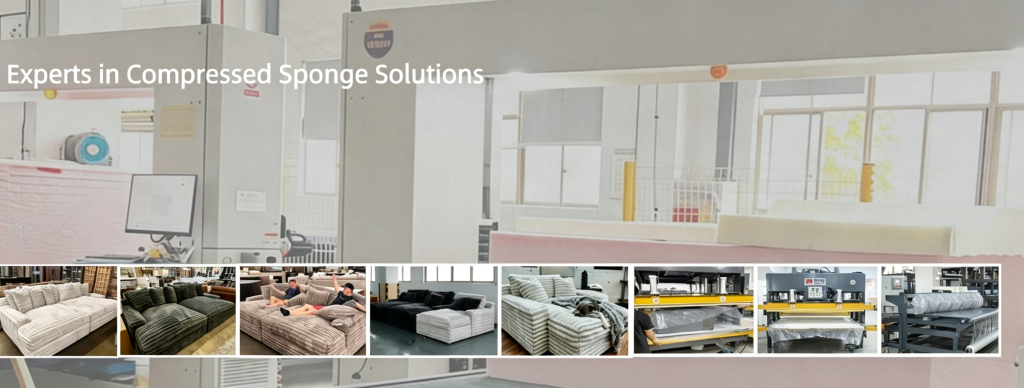
A true factory specializing in compressed foam furniture requires massive capital investment in heavy machinery. When auditing a supplier via video call or on-site visit, look for the following:
In-House Foam Pouring and Curing: Do they produce their own foam, or are they buying pre-cut blocks from a third party?
Precision CNC Foam Cutters: Complex geometric shapes (like triangles, half-moons, and foldable base pieces) require automated CNC cutting for perfect uniformity.
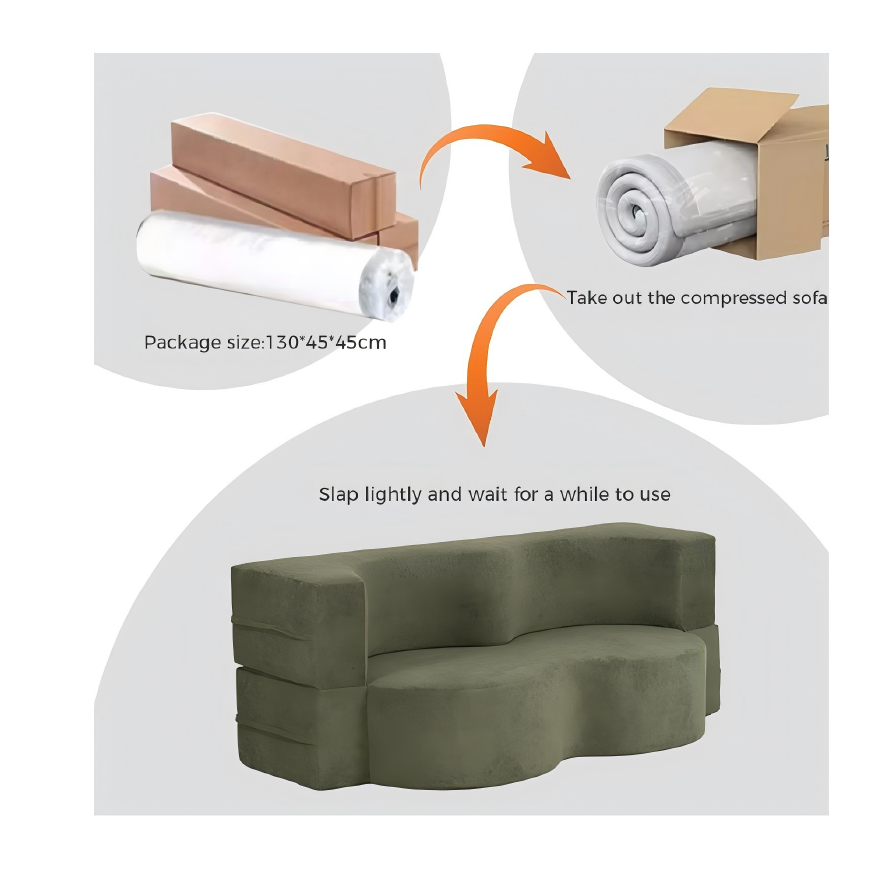
High-Tonnage Vacuum Presses: To reduce shipping volumes by up to 70%, the foam must be brutally compressed without damaging the cell structure.
Automated Roll-Packers: Heavy-duty, industrial roll-packing machines are required to seal the compressed product tightly for international freight.
Only facilities equipped with this entire vertical setup can genuinely offer a “Real Factory Price.” If they lack this machinery, they are outsourcing the heavy lifting, which adds middleman margins to your unit cost.