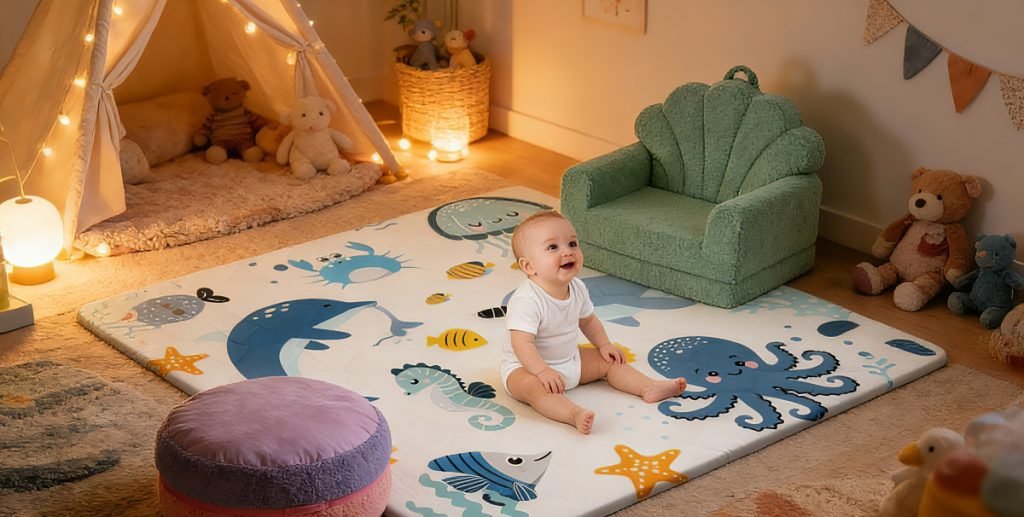
For B2B importers, brand owners, and retail buyers entering the children’s soft furniture market, product returns driven by sagging foam and hygiene issues are the fastest ways to erode profit margins. Understanding key engineering specifications—specifically high-density foam cores and integrated protective liners—is critical when auditing OEM/ODM suppliers.
1. Market Analysis: Why Consumers Ask “Are Foam Play Couches Worth It?”
The premium kids’ modular furniture market operates in the $200+ retail price point. At this tier, end consumers actively research whether are foam play couches worth it before purchasing. Their primary concern is product longevity under heavy daily use.
When budget manufacturers use low-density polyurethane foam (1.2lb to 1.5lb/cu.ft), the furniture sags, loses shape, and collapses during fort building within 3 to 6 months. This results in negative e-commerce reviews and high return rates. Sourcing products built on high-density specifications directly addresses this market gap.
2. Technical Sourcing Benchmarks: Foam Specifications
Determining the Best Density Foam for Kids’ Play Furniture
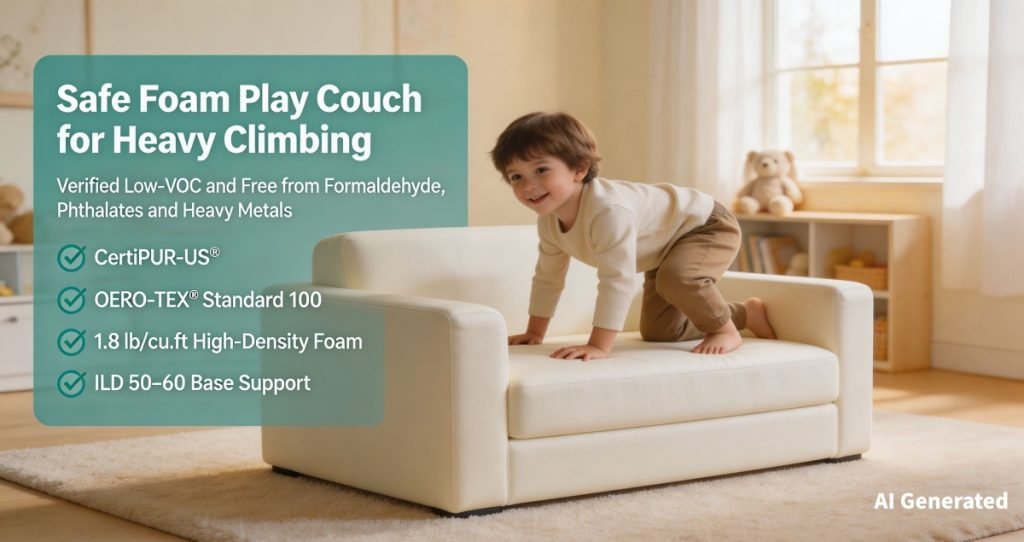
The industry benchmark for premium play furniture is 1.8 lb/cu.ft high-density foam with an Indentation Load Deflection (ILD) rating of 50–60 for base support layers. Specifying these exact metrics when negotiating with factory suppliers guarantees:
Structural Integrity: Holds up to 5-foot fort builds without buckling under child weight.
Impact Cushioning: Provides necessary energy absorption for active play while remaining soft enough for fall protection.
Shape Retention: Eliminates sag-related warranty claims.
To market a firm foam play couch for heavy climbing, your supplier must provide CertiPUR-US® or OEKO-TEX® Standard 100 certifications, verifying the foam is low-VOC and free from formaldehyde, phthalates, and heavy metals.
3. Resolving the 1 Consumer Pain Point: Liquid Spills & Hygiene
Why Integrated Waterproof Inner Liners Are Essential for B2B Importers
The most searched troubleshooting query in this category is how to clean vomit out of play couch cores. Unprotected polyurethane foam acts as a sponge for milk, juice, and potty training accidents. Once liquid penetrates an unlined foam core, organic odors become impossible to remove completely, destroying the product.
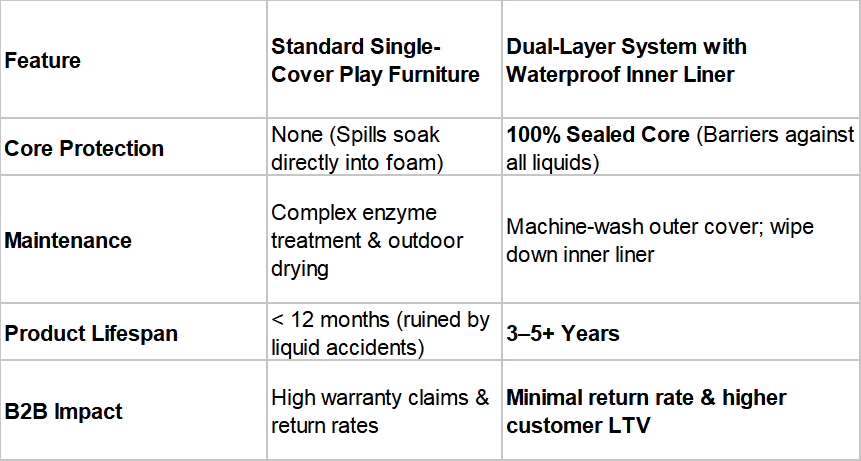
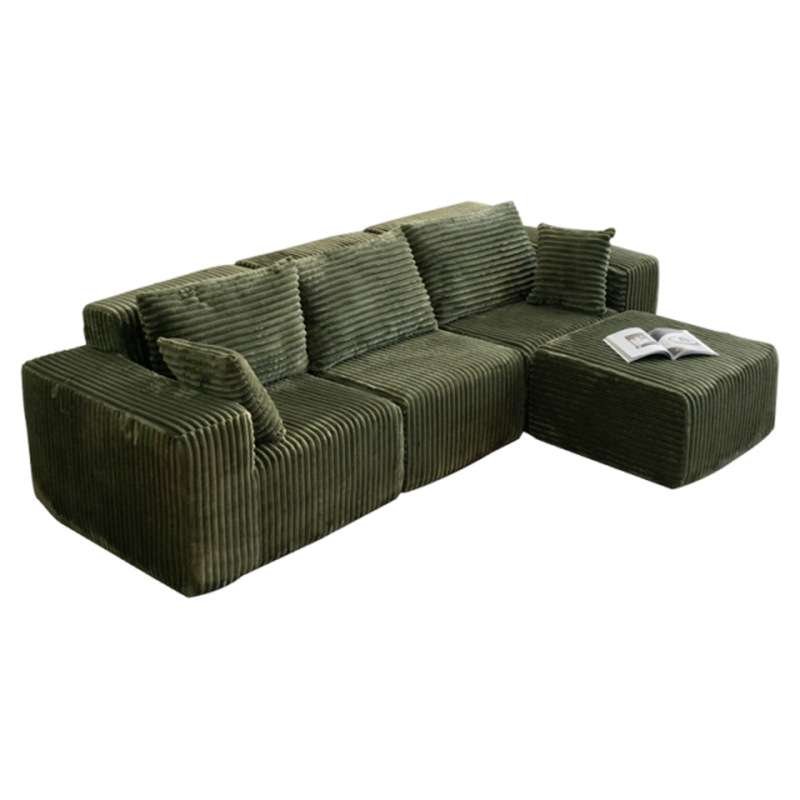
When sourcing, mandate a dual-layer system featuring an ultra-quiet, breathable Waterproof Inner Liner beneath the washable microsuede or corduroy outer cover. This allows end users to handle liquid accidents by simply unzipping the outer cover for machine washing while wiping down the sealed core.
4. Product Portfolio Strategy: Play Couches vs. Soft Climb ToysPlay Couch vs. Soft Climb Toys: Target Segmentation
A balanced product line caters to different stages of child development. Importers should structure their inventory based on target age groups and space constraints:
Indoor Soft Climbing Blocks for Babies (Ages 0–2): Ideal for nursery setups and dedicated playrooms. Focuses on early gross-motor development such as crawling, step climbing, and low-height sliding.
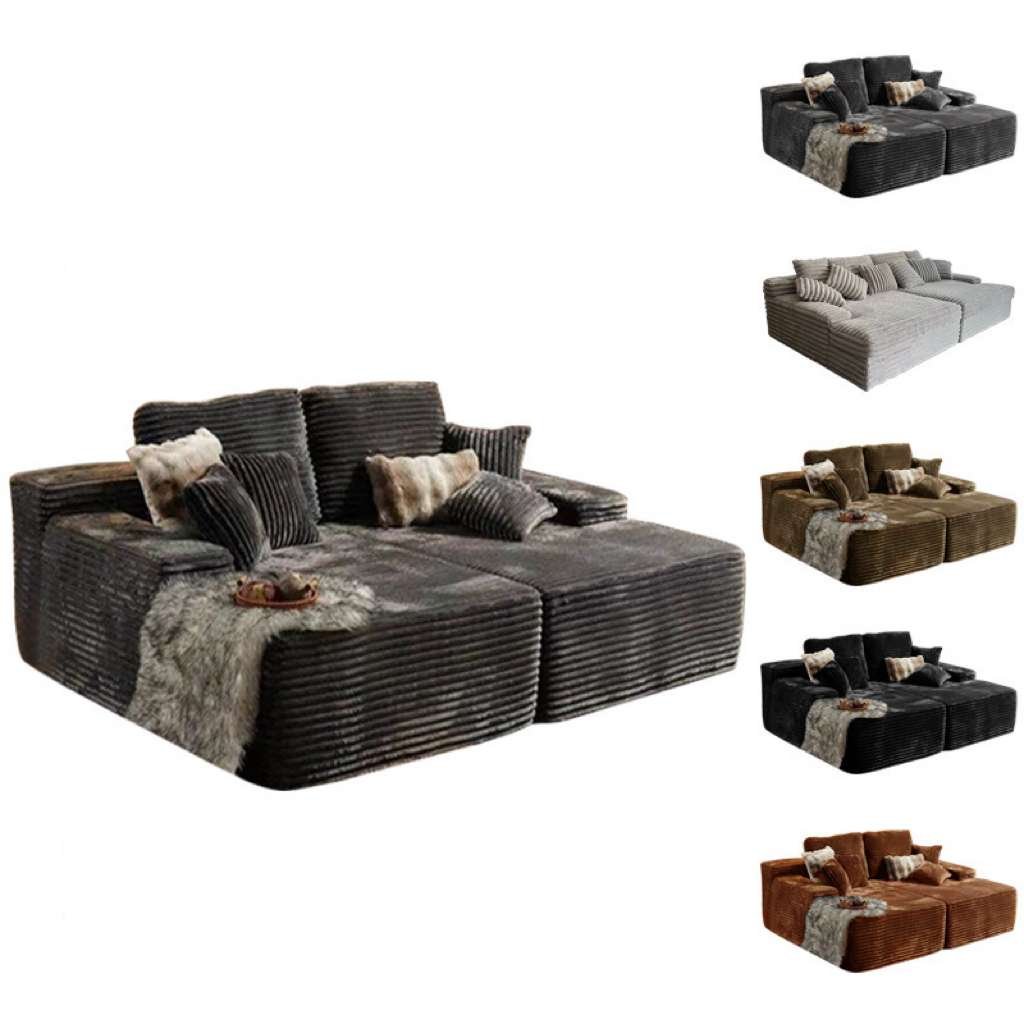
Play Couch for 1 Year Old to Toddlers (Ages 1–10+): Offers higher long-term utility. Converts between a seating couch, building blocks, play slide, and fold-out sleepover mattress.
By offering both modular couches and specialized climbing blocks built with identical 1.8lb high-density foam and waterproof lining, brands can capture early-stage parents and retain them across childhood growth cycles.
5. Factory Audit Checklist for Importers
When auditing OEM suppliers for kids’ soft furniture, confirm the following technical requirements before placing a Purchase Order:
Foam Density Verification: Request lab test reports confirming 1.8 lb/cu.ft density and ILD 50–60 rating.
Liner Fabric Construction: Ensure the waterproof liner utilizes quiet TPU/PU backing rather than noisy, crinkly PVC.
Safety & Compliance: Require CertiPUR-US® or REACH compliance documentation for international import clearance.
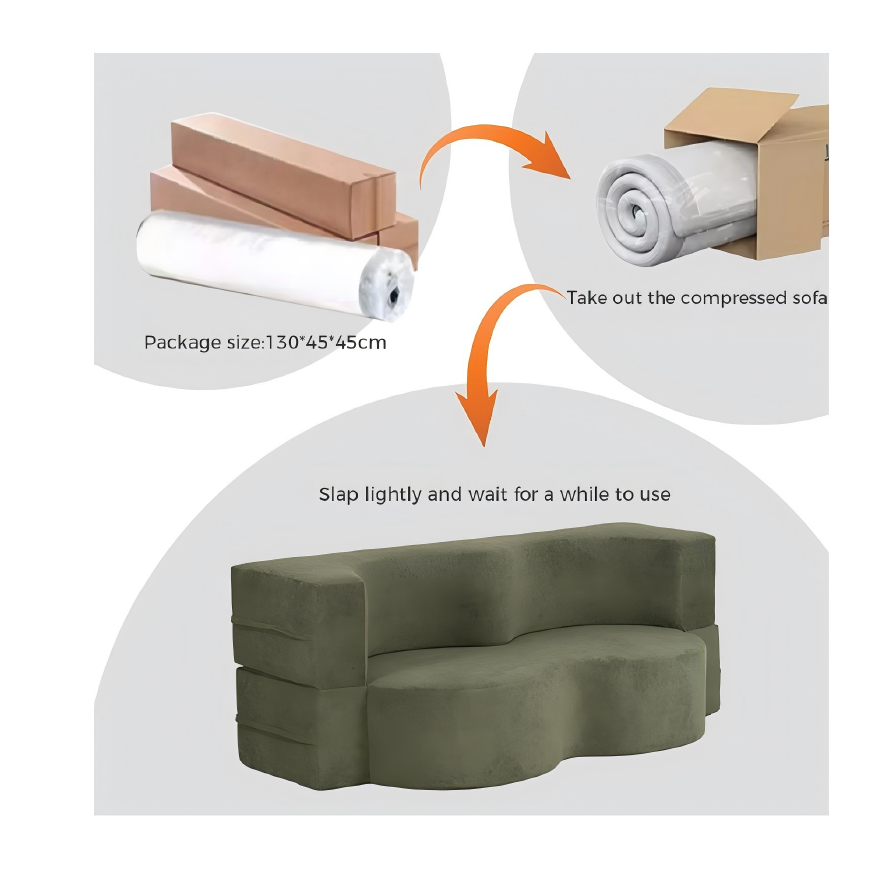
Compression Packaging Capability: Verify the factory’s vacuum-compression technology to optimize container loading and ocean freight costs without causing permanent foam deformation.