
The Truth About “Couch-in-a-Box” Wrinkles (And Why Foam Rebound Isn’t the Real Problem)
If you have spent any time browsing forums like r/SofaSnobs, you know the skepticism around vacuum-packed furniture is real. The horror stories are everywhere: someone unboxes a modular sofa expecting a sleek, tailored living room piece, only to get something that looks like a crumpled bedsheet pulled out from under a mattress.
The natural assumption? The foam failed to expand.
In reality, after reviewing dozens of compressed sofas and looking deep into material specs, foam failure is rarely the issue. The real deal-breaker comes down to two completely different metrics: Decompression Speed and Fabric Expansion Time.
The 1-Second Foam Myth
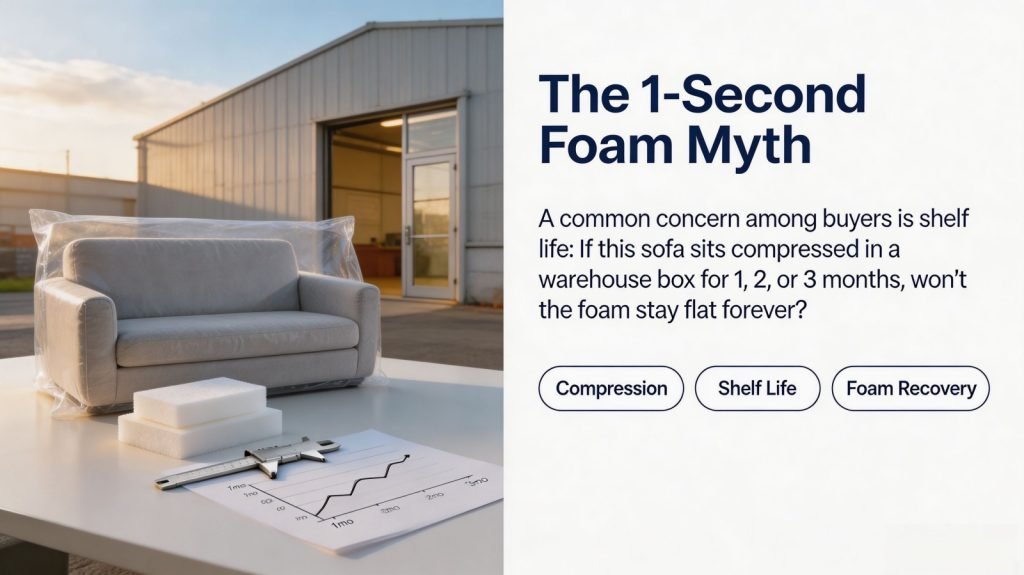
A common concern among buyers is shelf life: If this sofa sits compressed in a warehouse box for 1, 2, or 3 months, won’t the foam stay flat forever?
For modern, high-grade furniture, the answer is a resounding no.
High-end compressed sofas use 30D to 55D high-resilience pure polyurethane foam. Because of its dense, open-cell structure, the foam core exhibits a 1-second fast decompression the second you slice open the vacuum bag. Whether it has been packed for thirty days or ninety, the inner core snaps back to 100% of its volume almost instantly.
So why do so many boxed couches still look cheap and wrinkled when you first set them up?
The Real Culprit: Unbacked Fabric vs. Lamination
The disconnect between a plump sofa core and a wrinkled surface comes down to how the upholstery is constructed.
Foam Core Rebound: Takes 1 second to reach full height.
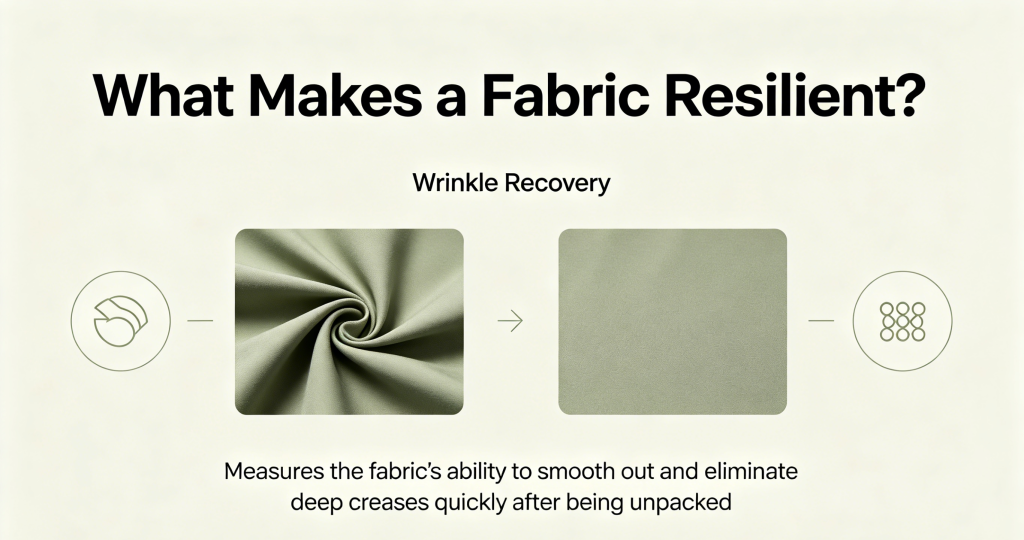
Surface Fabric Expansion Time: Takes 24 to 72 hours to fully relax.
When fabric is pressed tightly under atmospheric pressure during vacuum sealing, microscopic fibers bind together. Budget manufacturers make this worse by draping loose, unbacked fabric straight over raw foam. As the foam expands, the loose cover slides, bunches up, and traps deep creases that refuse to drop out.
The Lamination Difference
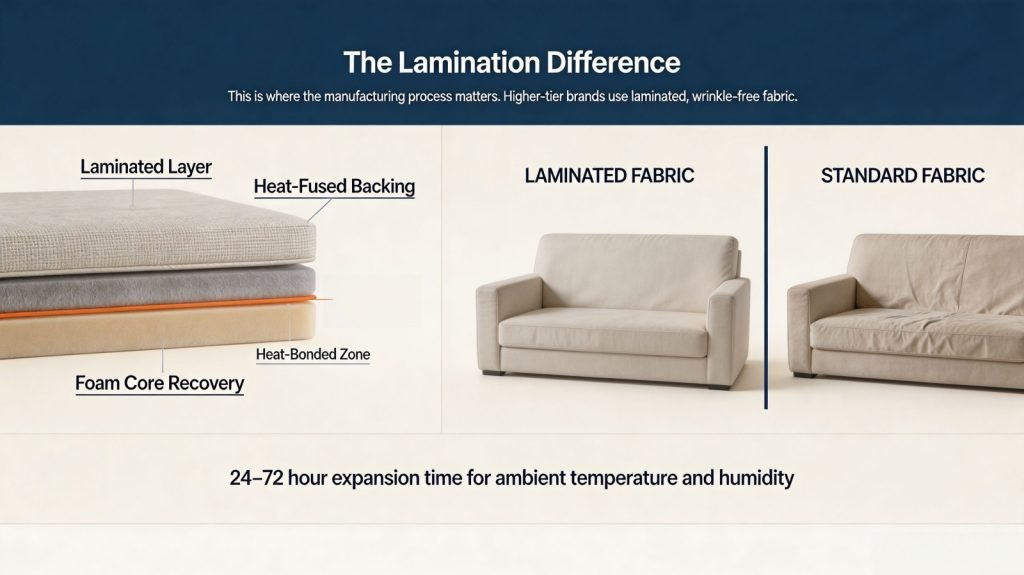
This is where the manufacturing process matters. Higher-tier brands use laminated, wrinkle-free fabric.
In a laminated cover, a high-resilience backing layer is heat-fused directly to the underside of the outer upholstery. When the foam core snaps back, the laminated fabric moves with it—pulling taut across the frame rather than sagging into loose folds.
While the micro-creases still need a 24 to 72-hour expansion time to react to ambient room temperature and humidity, a properly laminated fabric guarantees a smooth, tailored finish without permanent fold lines.
Buying Guide: 3 Steps to Avoid the “High density Foam Couch in a Box” Trap
If you are shopping for a compressed sofa but want to avoid a rumpled mess, look for these indicators before buying:
Check the Foam Density: Ensure the manufacturer specifies pure high-resilience foam (30D or higher). Avoid mystery blends or recycled scrap foam, which lose elasticity over time.
Verify Laminated Covers: Ask if the upholstery uses a fused backing layer designed for vacuum compression. This is the single biggest factor in achieving a wrinkle-free look.
Keep a Garment Steamer Handy for Quick Sofa Wrinkle Removal: Want to skip the 72-hour fabric expansion wait? A quick pass with a handheld steam iron held 1 to 2 cm away relaxes the textile fibers in minutes, giving you a crisp, store-display look on day one.