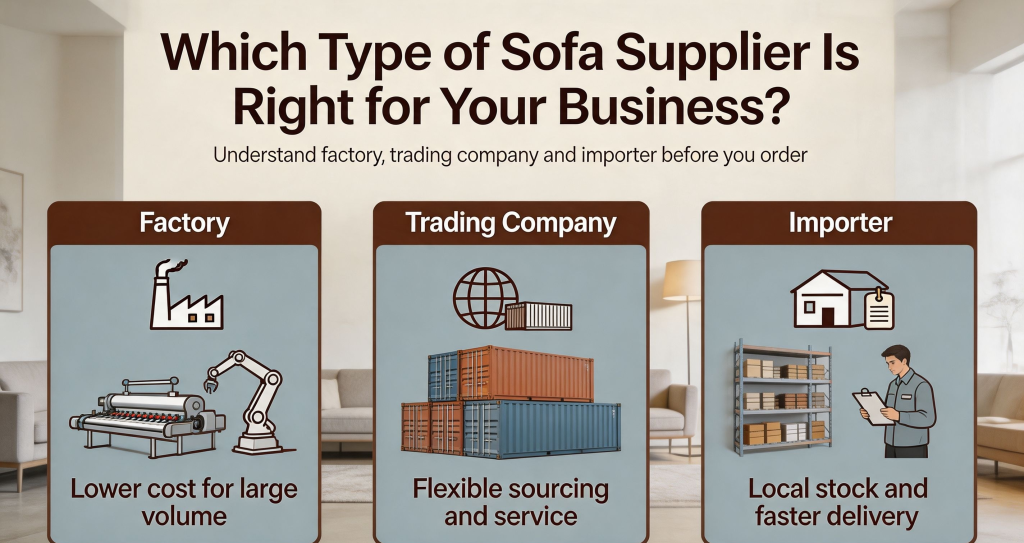
Picking the wrong compressed sofa supplier can easily derail your product timelines, hurt your build quality, and blow through your sourcing budget. But you can’t just rely on what a company calls itself—labels like “factory” or “trader” don’t tell the whole story about what a business can actually handle.
Some suppliers focus strictly on the compressed sofa’s production. Others specialize in sourcing products from multiple places. A third group actually manufactures the furniture and handles the shipping and export details in-house.
Which one works best for you depends on a few straightforward factors:
How many sofas you plan to buy
How much custom work you need done
How many different styles you want to order
How much help you need with shipping and paperwork
Why Should You Care About a Supplier’s Business Setup?
Imagine getting quotes from two different suppliers for the exact same sofa at the same price point. Even if the numbers match, their day-to-day operations can be completely different—and those differences usually don’t pop up until production is already moving.
A supplier’s setup directly changes:
How much direct oversight you have on the factory floor
Minimum order quantities (MOQs)
Your overall landed cost
How smooth your daily back-and-forth communication actually is
Matching your company with the right setup removes unnecessary middlemen, saves you endless back-and-forth, and keeps your supply chain predictable.
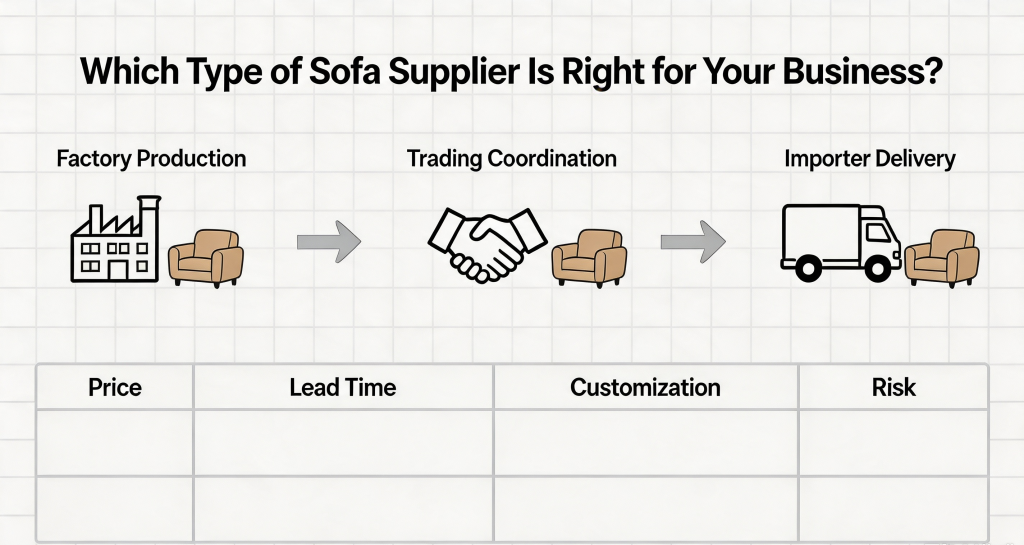
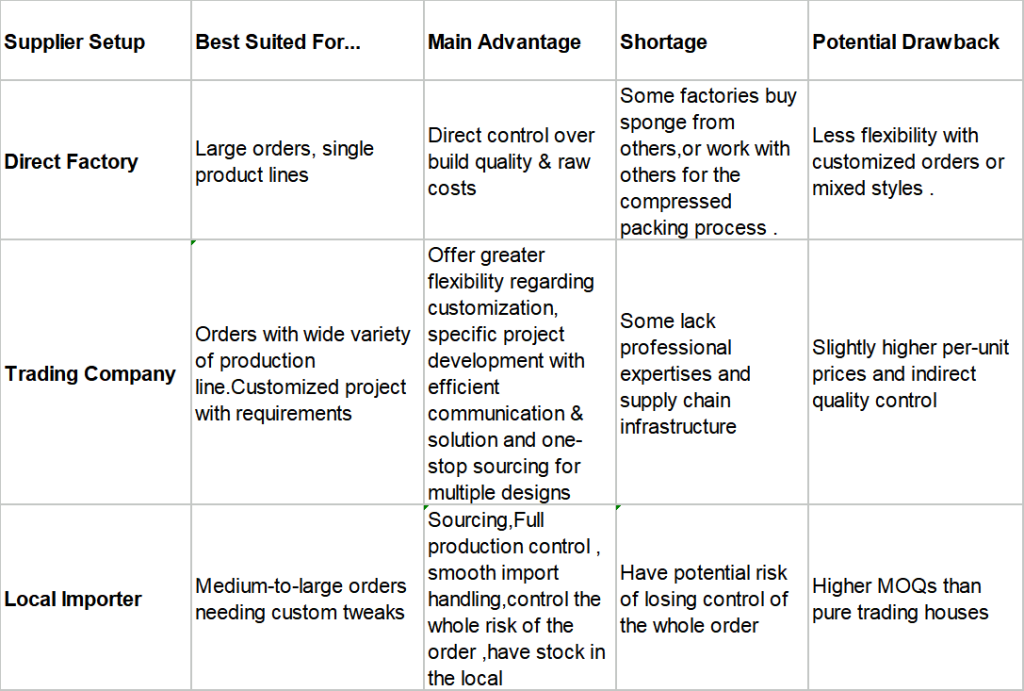
Pros and Cons of Direct Factory ,Trading company and Importer
Customizing Needs Clear Communication
Making changes to a compressed sofa—like tweaking the size, switching the fabric, changing the foam, or adding custom packaging—gets tricky very fast. Because several teams across different companies have to work together on custom details, staying on the same page is crucial.
High Volume vs. High Flexibility
Factories prefer big, simple orders. They like sticking to their standard routines and materials. If you want custom fabrics or unusual features—like scented or custom-colored sponge/foam—factories might set a huge MOQ of compressed sofas or refuse the job entirely. Why? Because introducing new chemical mixes or colored dyes can mess up their main production line.
Trading companies offer more flexibility. They are much better suited for custom designs, small quantities, or mixed-item orders. They also handle the back-and-forth communication far better. The catch? You need to work with a trading company that actually knows the industry well and has strong supplier connections.
Looking Beyond the Price Tag
A direct price quote from a factory might look cheaper at first, but the unit price is only part of what you actually pay. You still have to manage quality checks, export paperwork, and shipping logistics.
Because trading companies have experienced staff who handle these steps daily, they can manage complex custom projects smoothly—saving you time, effort, and hidden costs in the long run.