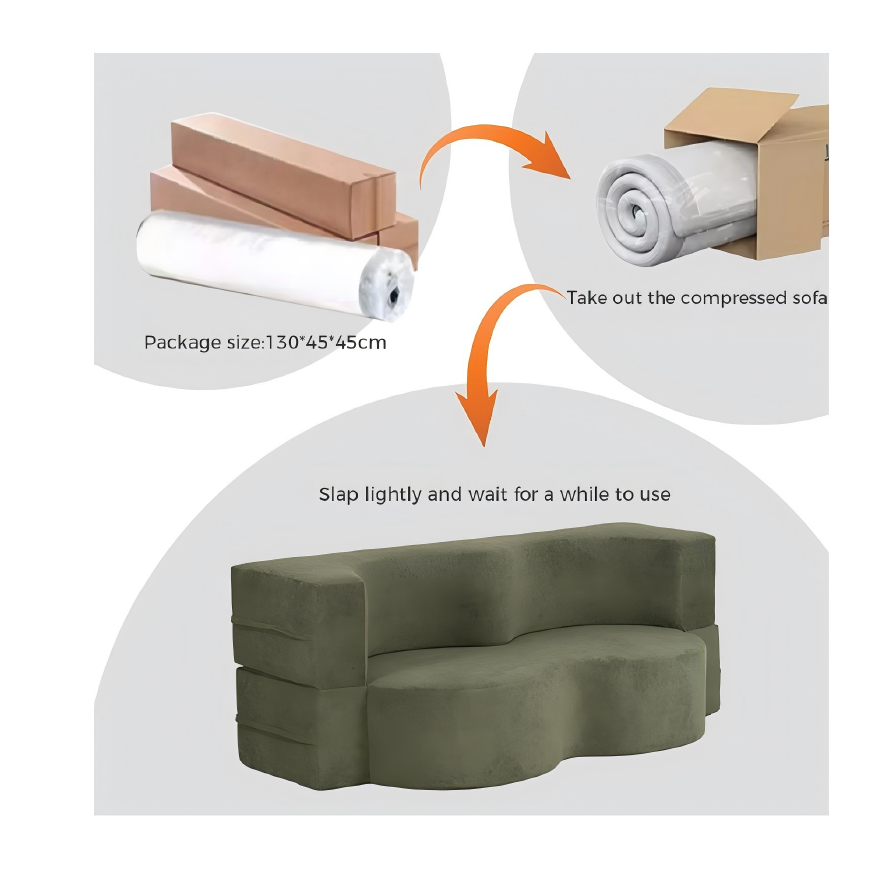
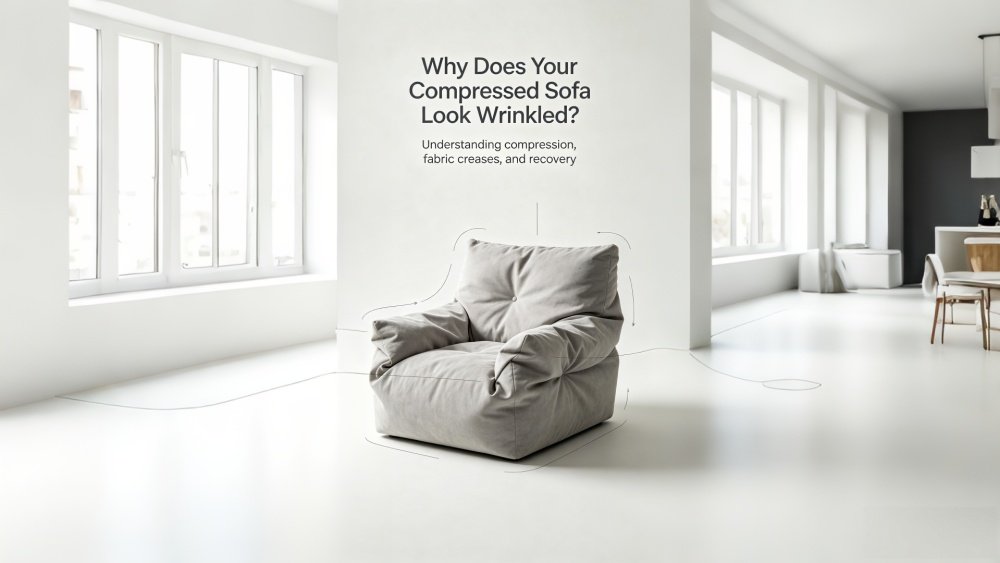
Unboxing a vacuum-sealed couch should be a satisfying experience, yet many consumers end up disappointed by permanent fabric creases, lumpy seating, or sagging edges. For discerning buyers and furniture enthusiasts who demand lasting quality, the secret lies in knowing what to look for under the surface.
A truly premium compressed sofa relies on technical precision across three non-negotiable pillars: Foam Core Architecture, Engineered Upholstery, and Structural Integrity.
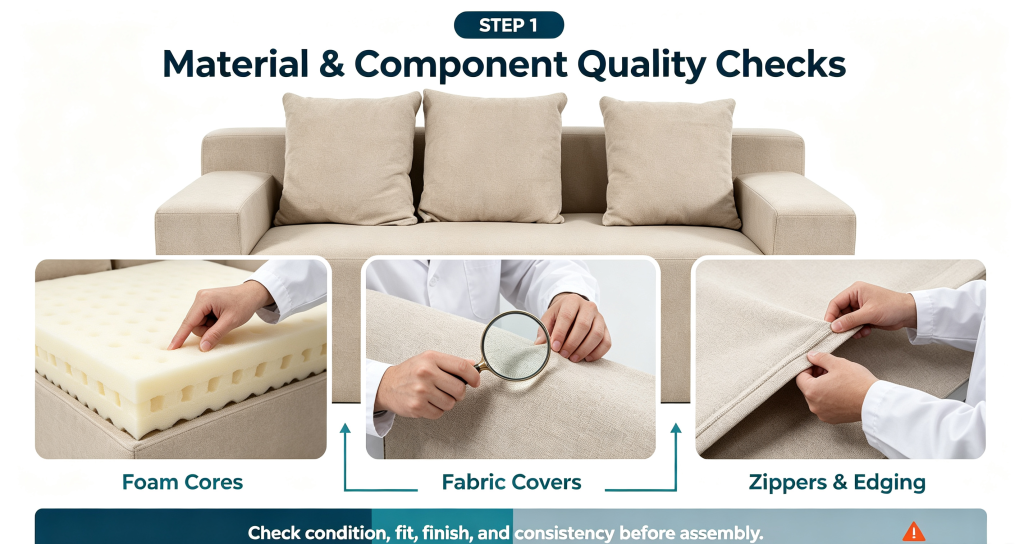
1. Foam Architecture: Density, Resilience, and Rebound Mechanics
The inner foam core is the foundation of any compressed sofa. Low-density or poorly processed foam leads to weak rebound, unpleasant off-gassing, and premature deformation.
Optimal Density Range (30–40 kg/m³): High-grade compressed seating requires polyurethane foam within the 30–40 kg/m³ density range. This density strikes the perfect balance between deep vacuum compression capability and long-term shape retention.
Support & Hardness (ILD Metrics): Quality medium-firm couches utilize an Indentation Load Deflection (ILD) rating around 150–200N. Advanced modular designs often incorporate multi-layered, zoned foam architecture to deliver balanced support without sagging.
Safety & Storage Limits: Certified pure foam (such as CertiPUR-US or OEKO-TEX compliant materials) guarantees zero toxic VOCs or chemical odors. Furthermore, premium foam should never remain factory-compressed for longer than 3 to 6 months to ensure a 100% full rebound upon unboxing.
2. Fabric Engineering & The Science of Wrinkle-Free Lamination
The outer upholstery creates the first visual impression. While standard synthetic fabrics are selected for elasticity and abrasion resistance (ideally rated at 20,000+ Martindale cycles), fabric selection alone does not prevent unsightly shipping creases.
Why Cheap Compressed Couches Stay Wrinkled: Budget manufacturers wrap raw foam cores in loose, unbonded slipcovers. Under intense hydraulic compression, excess fabric folds into tight micro-creases. When decompressed, loose fabric lacks the tension required to smooth itself out.
The Solution: Advanced Fabric-to-Foam Lamination High-end boxed sofas solve this issue through a specialized Lamination Process (bonding the outer upholstery directly to a thin foam backing via flame thermal bonding or eco-friendly hot-melt adhesives).
The Wrinkle-Free Effect: Because the fabric and foam backing are permanently fused, the outer upholstery expands at the exact same rate as the inner core during unboxing.
Taut Finish: The bonded backing acts like a spring, pulling the surface taut and completely eliminating deep compression wrinkles within 12 to 24 hours.
3. Structural Framework: Seam Strength and Connector Precision
Even with superior foam and laminated fabric, a compressed couch will fail without a reinforced manufacturing framework. In frameless or modular compressed systems, structural durability relies on seam tension and hardware integration:
High-Density Stitching: Quality manufacturing requires a strict stitching density of 8–10 stitches per inch using reinforced thread to prevent seam slippage or tearing under pressure shifts.
Modular Connectors: For modular or knock-down (KD) configurations, heavy-duty steel interlocking connectors ensure individual modules remain flush and stable during daily use.
Dynamic Fatigue Testing: Premium designs undergo rigorous dynamic seating simulations—enduring thousands of automated pressure cycles—to guarantee the internal structure resists fatigue over years of residential use.