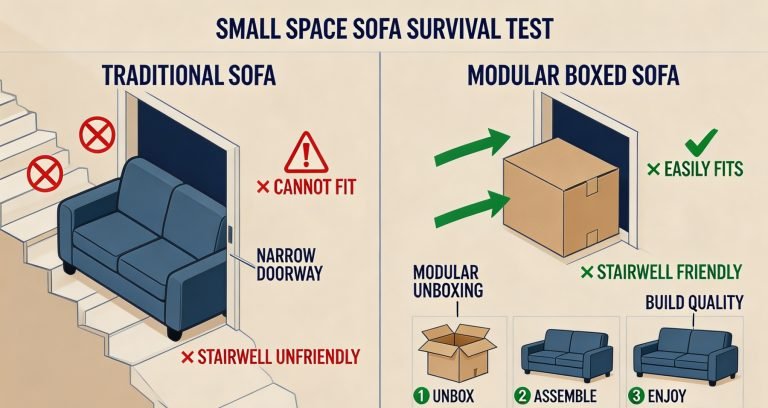
Moving furniture into a high-rise apartment or a narrow walk-up building is a physical nightmare. Standard traditional sofas—with rigid wooden frames and bulky 90cm-plus depths—frequently get stuck in stairwells, scrape doorway frames, or require expensive specialized delivery services just to clear the entrance.
For apartment dwellers, the sofa-in-a-box concept seems like the ultimate problem solver. But one major concern remains: If a couch arrives vacuum-sealed in a compact box, is it just cheap temporary foam that collapses after a few months?
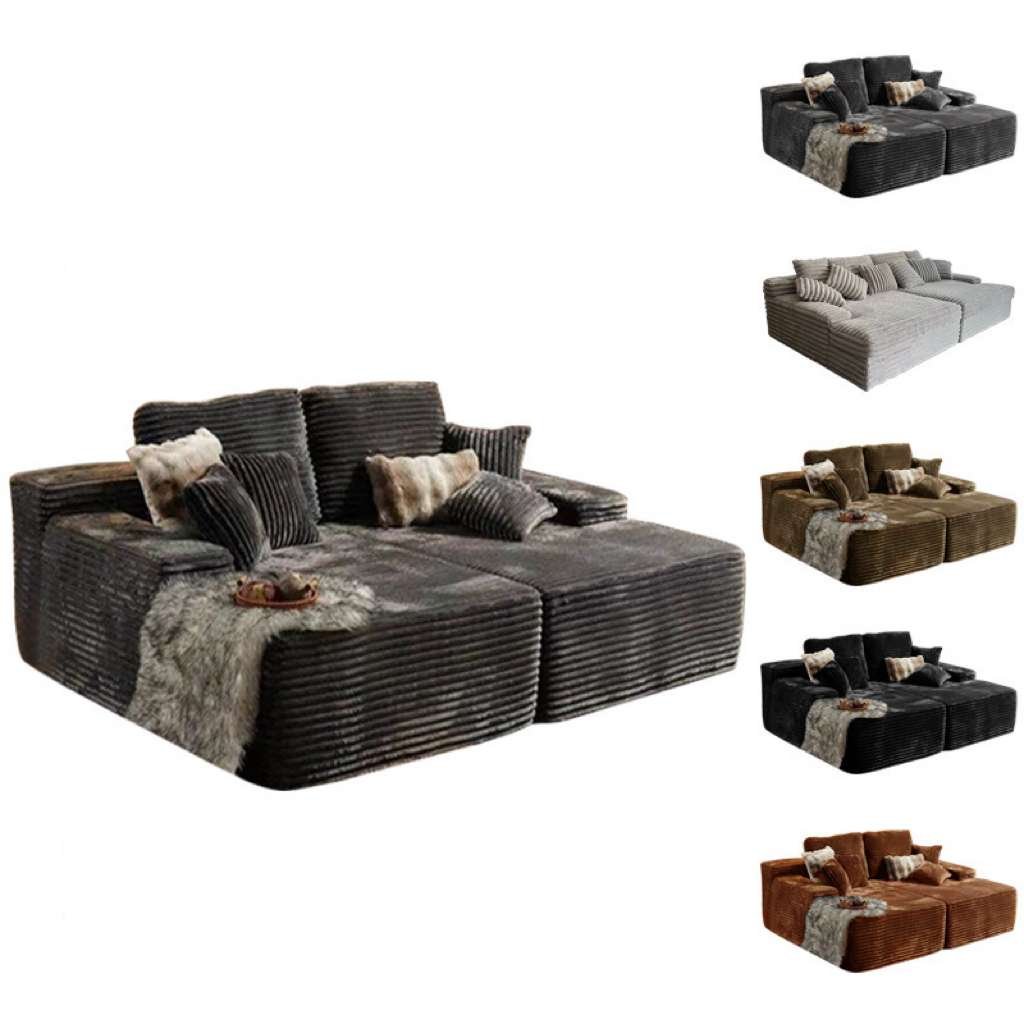
Here is the truth: A high-quality Modular Compressed Sofa does not compromise on structural support. By shifting away from hollow frames to high-density foam engineering, compressed couches deliver long-term durability while easily bypassing narrow architectural bottlenecks.
The Walk-Up Problem: Dimensions & Logistics
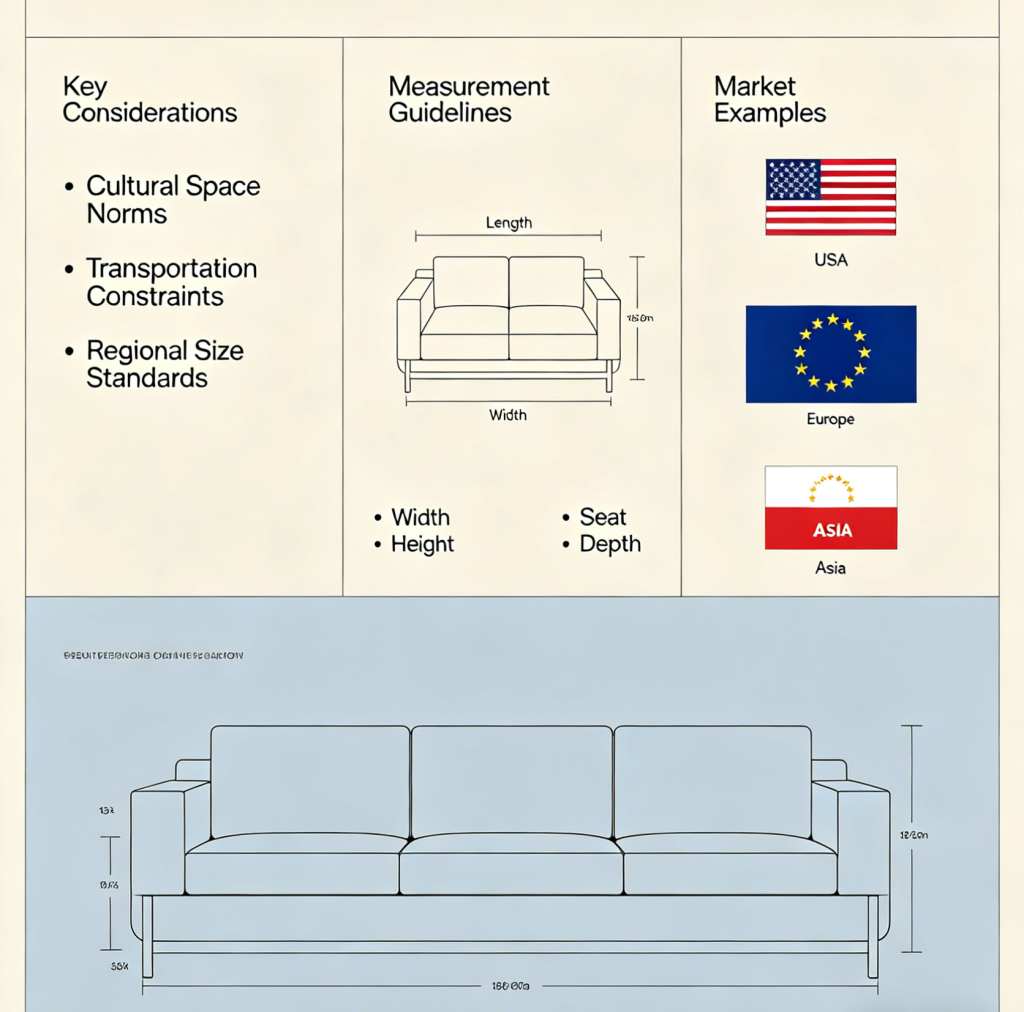
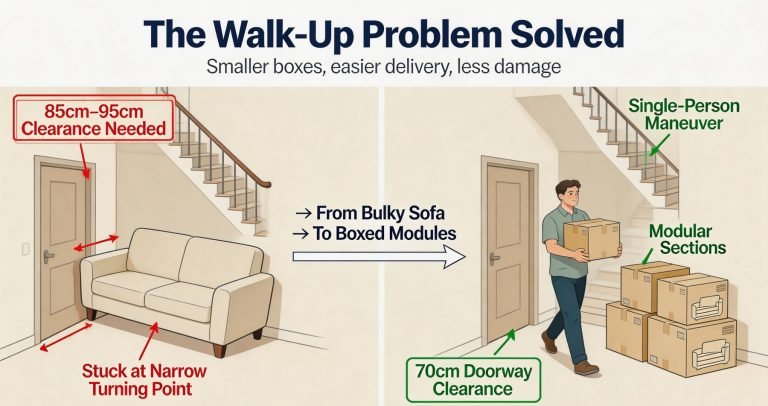
The average narrow apartment hallway or stairwell turning point measures around 75cm to 80cm in width. Traditional 3-seater sofas often require a clearance path of at least 85cm to 95cm, making delivery nearly impossible without removing door frames.
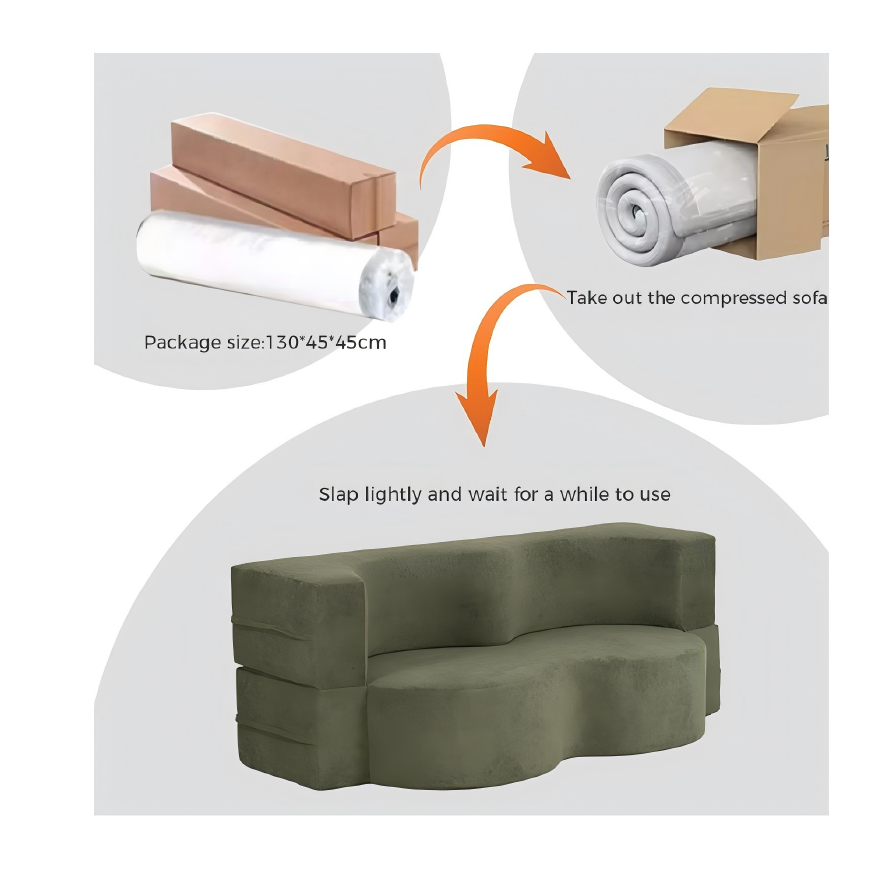
A modular compressed sofa solves this through smart packaging metrics:
The 70cm Doorway Clearance: Compressed sofas are divided into modular sections and vacuum-sealed. Each boxed module measures well under 50cm × 50cm × 80cm, allowing a single person to navigate 70cm doorways, tight elevator doors, and 90-degree stairwell turns effortlessly.
Volume Compression (CBM Reduction): Vacuum-packing technology reduces the original product packaging volume (CBM) by 60% to 70%. This compact footprint minimizes ocean freight fees and parcel shipping costs without damaging the internal structure.
Quality Standards: How High-Density Foam Outperforms Wood Frames
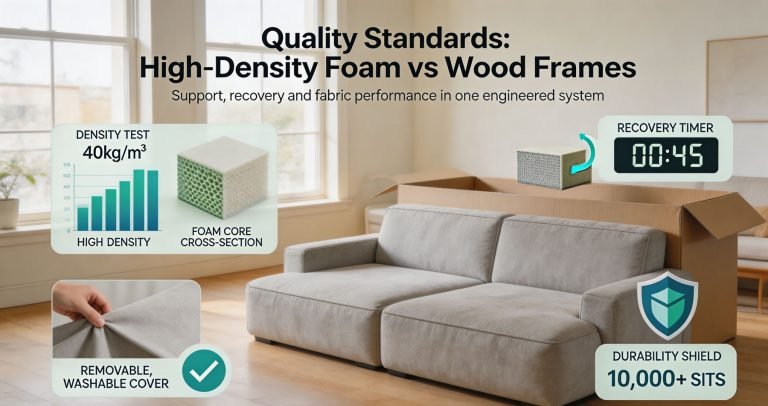
Many consumers worry that box-shipped sofas lack proper seating support or sag over time. Cheap compressed couches fail because they rely on low-grade 20D–25D recycled fillers. However, premium modular compressed sofas utilize advanced foam architecture to ensure high support and rapid recovery:
30D–55D High-Resilience Pure Foam: Density is the primary indicator of durability. Quality compressed sofas use 30D to 55D high-resilience pure foam cores, creating an ergonomic “spring-back” structural effect. This firm, supportive base rivals mid-range timber frames without the risk of joint creaking or frame breakage.
Precision Expansion & Recovery Rate: A properly engineered foam sofa requires a 72-hour post-compression aging test during manufacturing. Upon unboxing, high-resilience pure foam expands to 95%+ of its original volume within 24 hours, achieving 100% full recovery with zero corner sagging within 48 to 72 hours.
Wrinkle-Free, Washable Covers: High-end compressed designs utilize composite fabric lamination (such as corduroy, bouclé, or heavy velvet) paired with OEKO-TEX Standard 100 certification. The fabric layers stretch evenly as the foam expands, preventing permanent surface creasing.