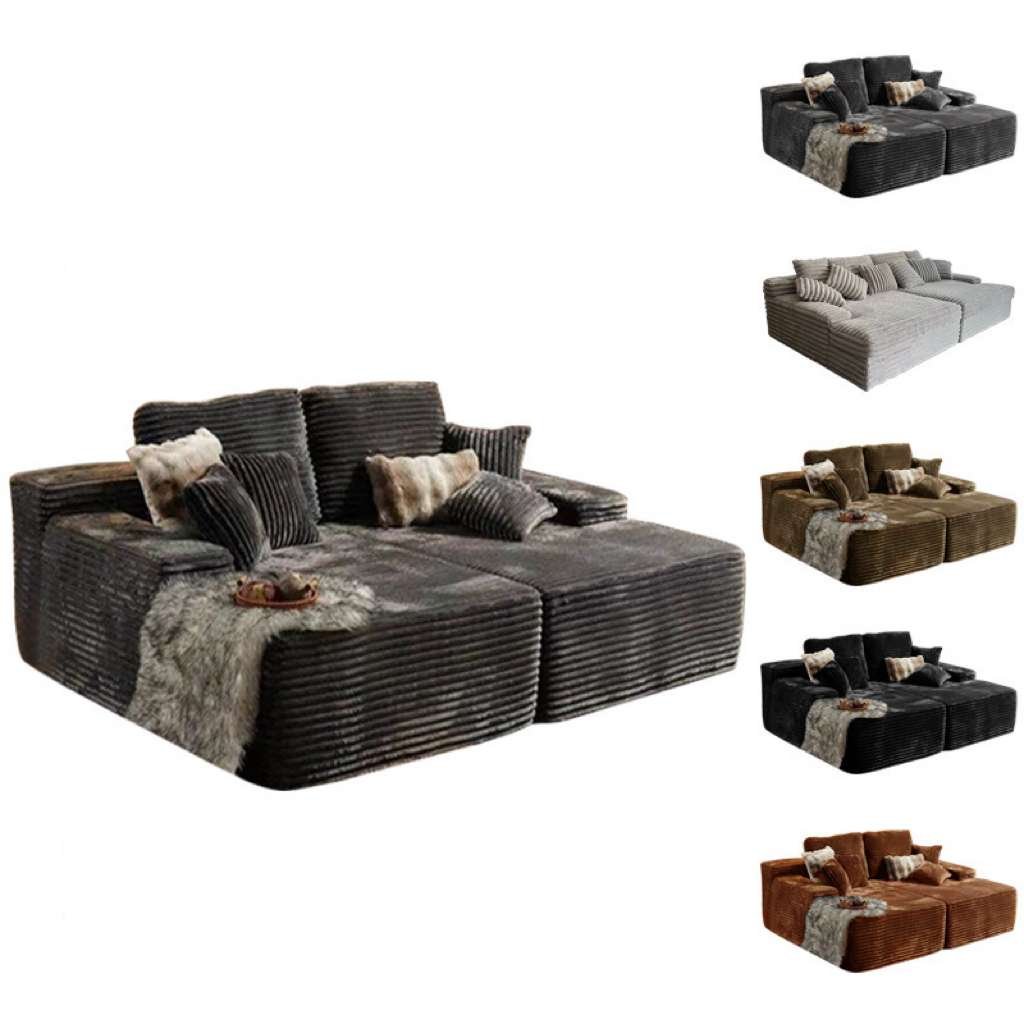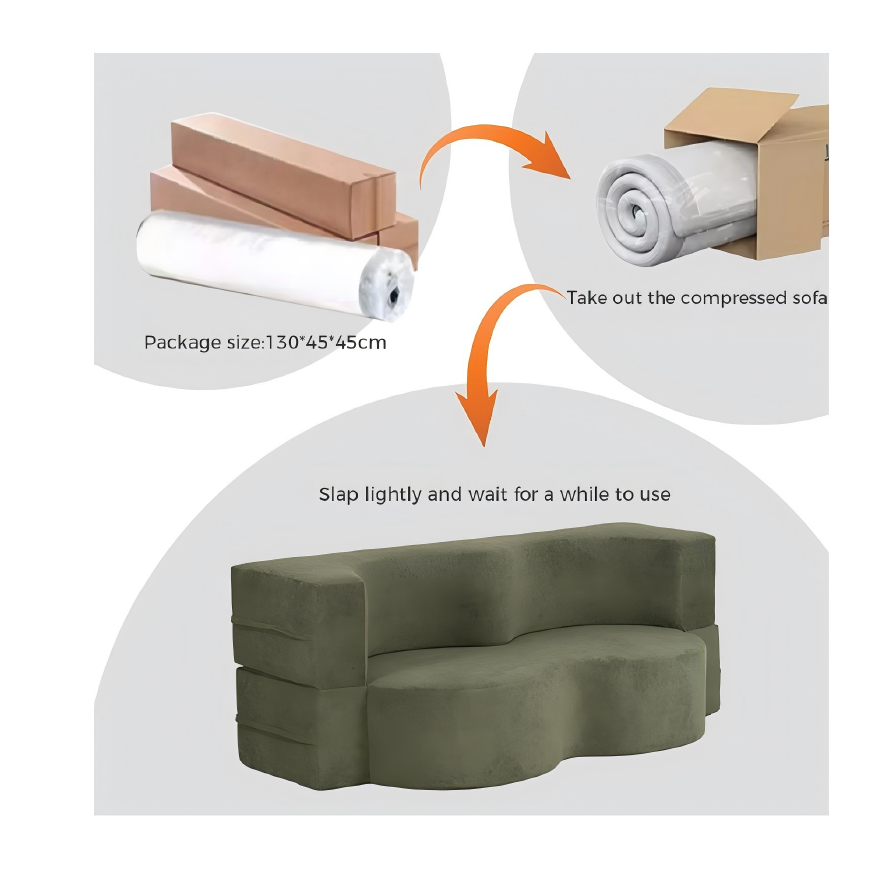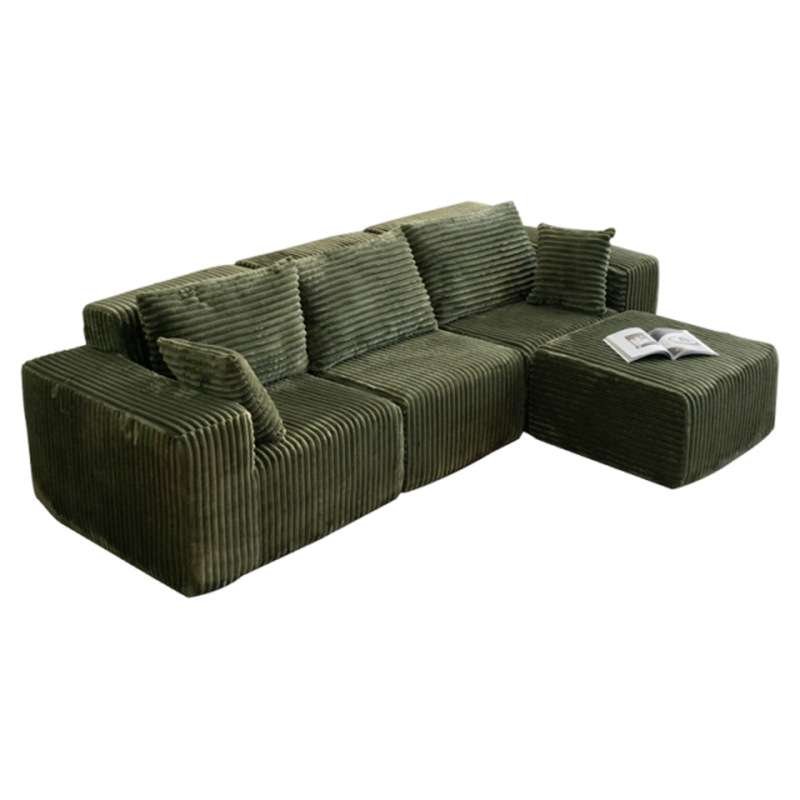
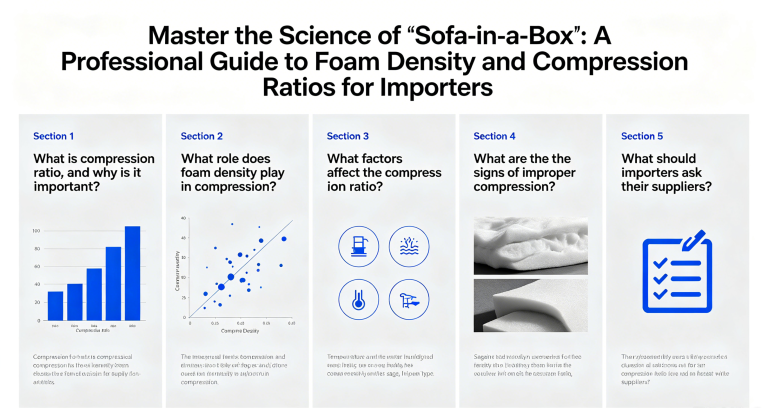
In the competitive world of furniture e-commerce, the Boneless Sofa (fully foam-based, non-frame construction) has emerged as a logistics game-changer. However, many importers still struggle with a recurring nightmare: high shipping costs, poor recovery after unboxing, and “dead” foam that leads to expensive customer returns.
The secret to a successful “Sofa-in-a-box” business lies in the delicate balance between Foam Density and the Compression Ratio. This guide breaks down how to optimize these variables to ensure your shipments arrive compact and bounce back to life instantly.
What is a Compression Ratio and Why Does It Define Your Profit?
The compression ratio refers to the relationship between the sofa’s expanded volume (final usable size) and its compressed volume (vacuum-packed size).
Formula: Compression Ratio ≈ Expanded Volume ÷ Compressed Volume
For example, if a 1.0 m³ boneless sofa is vacuum-shrunk to 0.2 m³, you have a 5:1 ratio. This means the product is occupying only 20% of its original footprint during transit.
The Core Ingredient: How Foam Density Dictates Recovery
Many buyers mistakenly believe all foam behaves the same under pressure. In reality, Foam Density (measured in $kg/m³$) is the #1 predictor of structural stability.
Higher density means more material per cubic meter. While low-density foam is easier to squish, it lacks the “muscle” to push back after being trapped in a box for 60 days of ocean freight.
Understanding the “Compression Set” Value
Beyond density, professional importers must look at the Compression Set Value. This measures the permanent deformation of foam after being compressed under specific conditions. A lower value equals better recovery.
Standard Foam (28-35 $kg/m³$): 10–15% set value.
High-Resilience (HR) Foam (30-40 $kg/m³$): ≤ 10% set value.
Premium Compression Foam (40-50 $kg/m³$): ≤ 5% set value. (The Gold Standard for “Sofa-in-a-box”).
Critical Factors Affecting the Compression of Boneless Sofas
1. Structure: Frameless vs. Hybrid
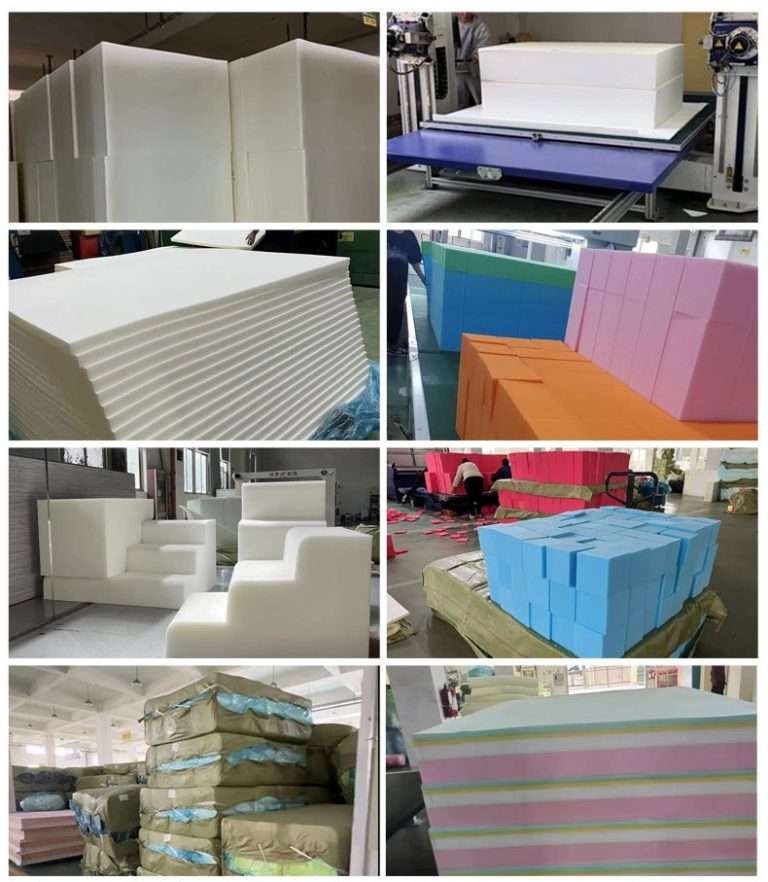
The Boneless Sofa (all-foam) offers the best compression performance, often achieving a 5:1 to 7:1 ratio. Once you add wood or metal frames, the “crushability” drops significantly, often limiting you to a 3:1 ratio.
2. The Packaging Method
How the factory packs the unit determines the “Unboxing First Impression”:
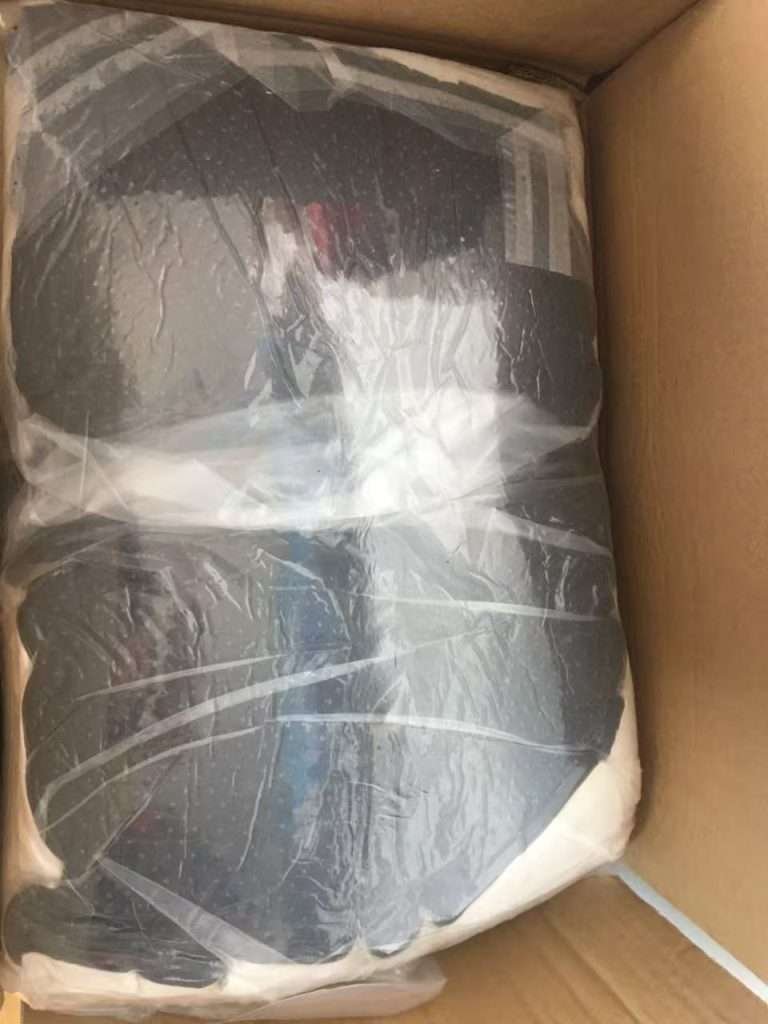
Vacuum Flat Compression: Reduces volume by 60-70%. Best for maintaining fabric flatness.
Roll-Packed (Burrito Style): Highly efficient for shipping but can cause more fabric wrinkling if the foam isn’t high-density.
Red Flags: Signs of Improper Compression
If the balance between density and pressure is wrong, you will see these symptoms upon arrival:
Signs of Over-Compression (Foam Fatigue)
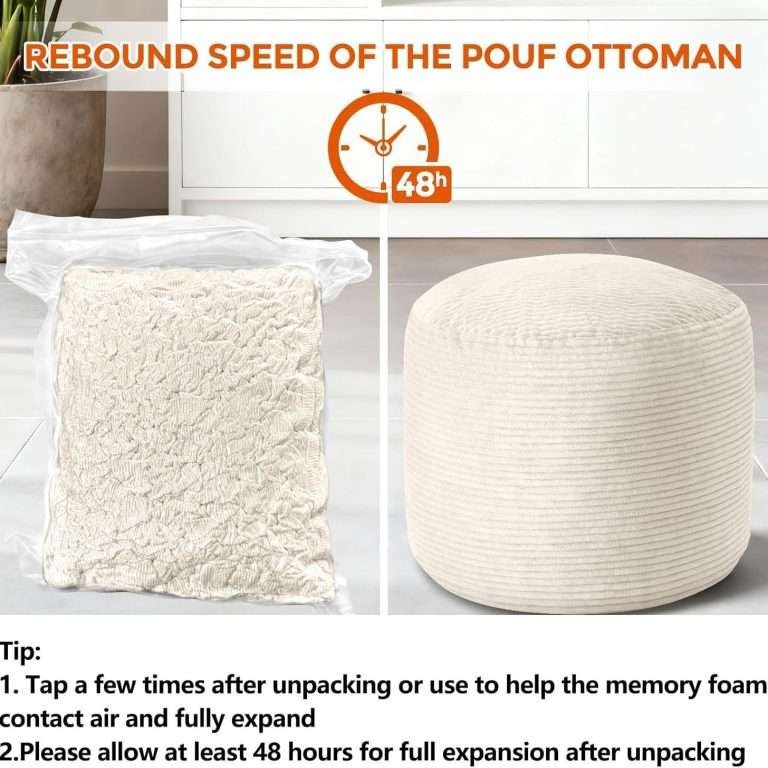
Slow Rebound: The sofa takes more than 72 hours to reach full size.
Permanent Indents: Corners or edges remain “pancaked” even after days.
Fabric Ruin: Excessive pressure creates permanent creases in velvet or leather.
Signs of Under-Compression (Wasted Freight)
Bulging Cartons: Cartons arrive torn because the foam expanded during transit.
Low Loading Volume: You are paying for “shipping air” rather than product.
What Importers Should Ask Suppliers Before Placing an Order
To avoid the “dead foam” trap, use these technical questions during your next sourcing call:
What is the specific density of the foam core? (Look for 35D-45D for boneless sofas).
What is the Compression Set value? (Aim for < 10%).
How long has the sofa been tested in a compressed state? (Ask for 60-day or 90-day test results).
Can you provide a “Time-Lapse Rebound Video”? (Crucial for verifying real-world recovery).
What is the maximum storage time limit before foam damage occurs?
Conclusion: Balancing Logistics with Luxury
The goal of compression isn’t to create the smallest box possible—it’s to find the Safe Equilibrium. For a premium Boneless Sofa, using high density High-Resilience foam allows you to maximize container space while guaranteeing that your customer receives a plush, supportive, and wrinkle-free product.
By understanding the relationship between $kg/m³$ and compression ratios, importers can lower their freight costs, slash return rates, and build a brand known for “unboxing excellence.”
Looking for a technical partner? With over 20 years of export experience, we specialize in high density HR foam and precision compression for the global “Sofa-in-a-box” market. Contact us for a technical consultation on your 2026 collections.