Beyond the Box: How to Engineer the Perfect Comfort Balance with Multi-Density Foam Fillers
1.The Vacuum Compression Dilemma: Why Single-Density Foam Fails
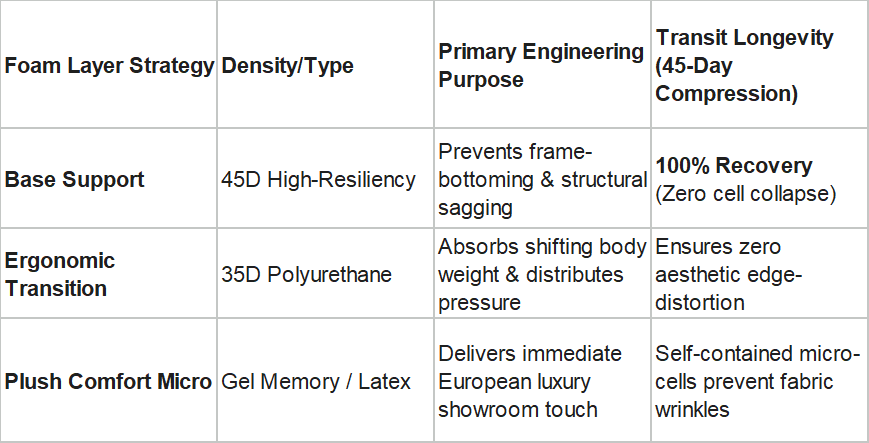
Relying on a 100% solid HD foam core unnecessarily inflates your manufacturing costs by 25% to 35%. By transitioning to a multi-density composite structure, you only allocate the costly 45D material where structural integrity is absolutely mandatory (the base).
The rest of the profile is filled with highly cost-effective 35D and comfort micro-layers. This hybrid architecture extracts the maximum utility out of every material, allowing you to pass the cost-savings down to your retail margins while maintaining a 5-year anti-sagging consumer warranty.
The B2B Bottom Line
In the competitive direct-to-consumer (DTC) furniture sectors, product returns due to unboxing distortion or poor comfort cost brands an average of $150 to $300 per incident in reverse logistics. Multi-density layering allows you to ship a highly compact package via standard courier networks, unlock massive freight yields, and deliver uncompromised luxury comfort—all while optimizing your production bottom line.
2. The Foundation: Why Density is the True Measure of Longevity
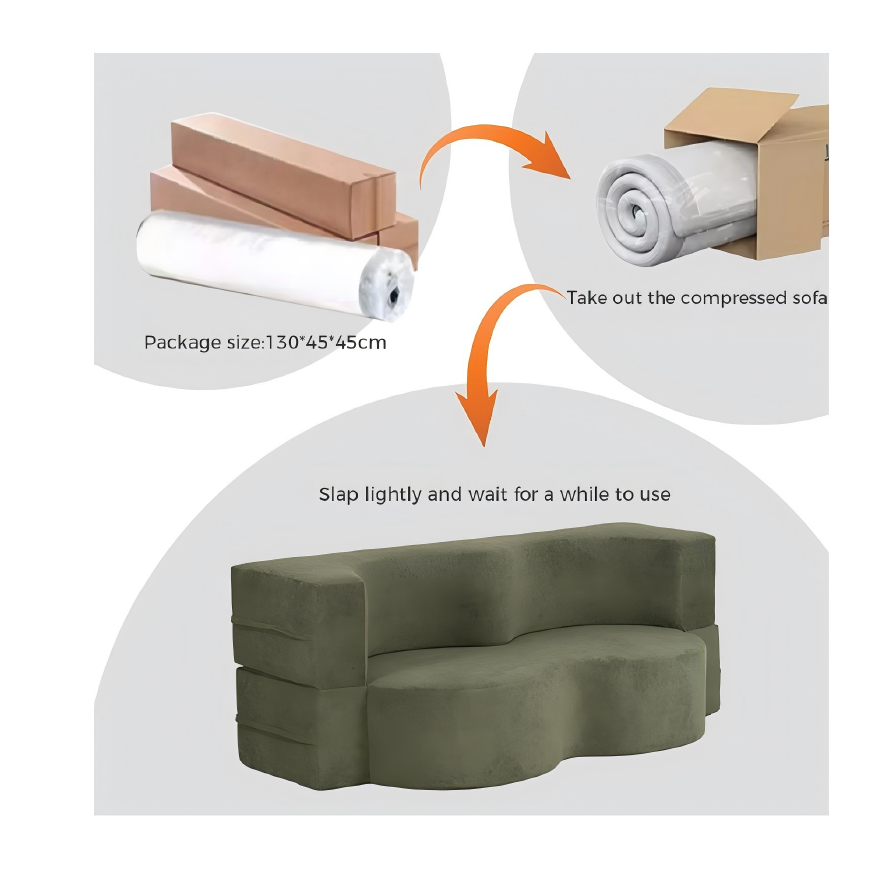
When we talk about “Sofa-in-a-Box” or compressed furniture, the biggest fear for importers is permanent deformation. This is where density plays a decisive role.
High-Density Foam (35D – 45D): The Structural Backbone
For high-end residential furniture or commercial seating, 45D pure foam is the gold standard.
The Physics: Higher density means more material per cubic meter, which translates to a higher resilience rate (>95%).
The Business Logic: While the initial cost is higher, the return rate drops to nearly zero. Products utilizing 45D foam maintain their “showroom shape” for 5-10 years, making them ideal for premium brands .
Medium Density Foam (25D – 30D): The Value King
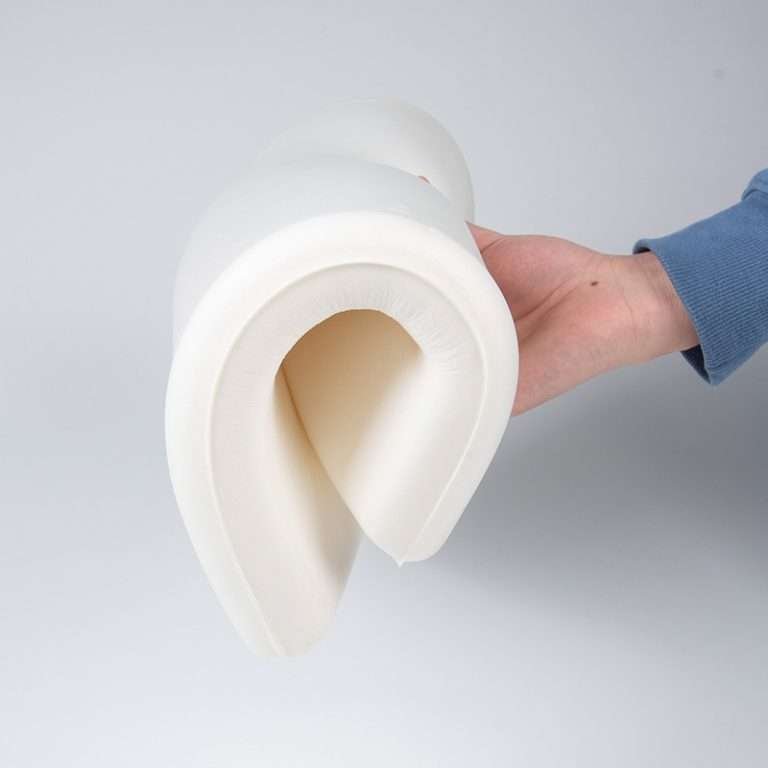
This is the sweet spot for entry-level furniture or guest room pieces. It offers excellent initial comfort and can be compressed to 37% of its original volume, drastically reducing landed costs.
3.The Architecture of Comfort: Layering 45D, 35D, and Memory Foam
1). The Comfort Layer: Hybrid Engineering with Memory Foam
If HD foam is the “bones,” Memory Foam is the “soul.” However, a product made entirely of memory foam would be too soft and lack support. The magic happens in the Hybrid Layering Technique.
Pressure Relief: Adding a 2-5cm layer of 50D Gel Memory Foam on top of a 35D support base creates that “instant luxury” feel.
Thermoregulation: In 2026, “Hot Sleeping” is a major customer complaint. By using open-cell memory foam, you allow air to flow through the compressed cells, solving the heat retention issue common in cheaper vacuum-packed products.
Many manufacturers overlook PP Cotton (Polypropylene Cotton), but it is essential for achieving the “curvy” and “inviting” look seen in trending modular sofas and kids’ play couches.
Targeted Use: We use PP Cotton primarily in backrests and armrests where deep structural support is less critical than tactile softness.
Cost Optimization: PP cotton is significantly lighter and cheaper than solid foam. By mixing PP cotton wraps around a foam core, you achieve a “plump” aesthetic without the weight and cost of a solid foam block.
The “Play Couch” Scenario: For products like the All-in-One Compressed sofa, a mix of HD foam for the base (climbing stability) and PP cotton-filled pillows (soft landing) provides the highest safety-to-cost ratio.
2). PP Cotton (Poly-Fil): The Secret Weapon for Aesthetics and “Fluff”
Many manufacturers overlook PP Cotton (Polypropylene Cotton), but it is essential for achieving the “curvy” and “inviting” look seen in trending modular sofas and kids’ play couches.
Targeted Use: We use PP Cotton primarily in backrests and armrests where deep structural support is less critical than tactile softness.
Cost Optimization: PP cotton is significantly lighter and cheaper than solid foam. By mixing PP cotton wraps around a foam core, you achieve a “plump” aesthetic without the weight and cost of a solid foam block.
The “Play Couch” Scenario: For products like the All-in-One Compressed Sofa, a mix of HD foam for the base (climbing stability) and PP cotton-filled pillows (soft landing) provides the highest safety-to-cost ratio.
4.Driving Margins: How Layered Foam Reduces B2B Return Rates
To achieve the highest Price-to-Performance Ratio, you must match your material stack to the specific user scenario.
Customer Case :
One of our customers have budget to compete in the fierce market . We offered a solution to use Multi-layer Polyurethane foam for a compressed sofa .
Bottom layer: Firm 30D density.
Middle layer: Soft 25D density.
Top layer: Soft PP cotton.
It helped the customer save 21% cost to sell thousand pcs until now .