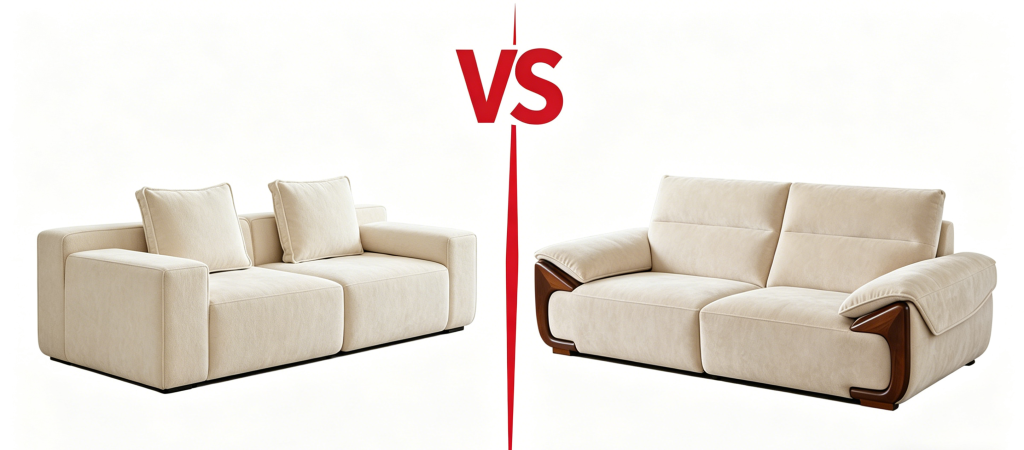
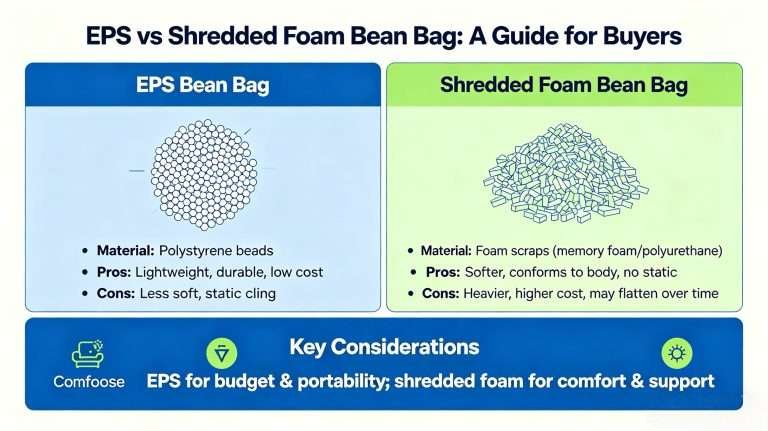
For international furniture buyers, choosing between EPS (Expanded Polystyrene) beads and High-Density Foam as a bean bag filler is far more than a matter of comfort. It is a calculated gamble involving logistics overhead, product lifecycle, and brand positioning.
With over 10 years of export experience, I have seen brands win or lose markets based on this single choice. Below is a deep dive into the five critical dimensions comparing these two fillers to help you optimize your 2026 supply chain.
1. Physical Stability: Resilience vs. Compression Fatigue
EPS Beads: These are closed-cell plastic spheres filled with air. Over time, the air is forced out, leading to irreversible “flattening.” Customers will eventually need to purchase “refill” packs to restore the shape.
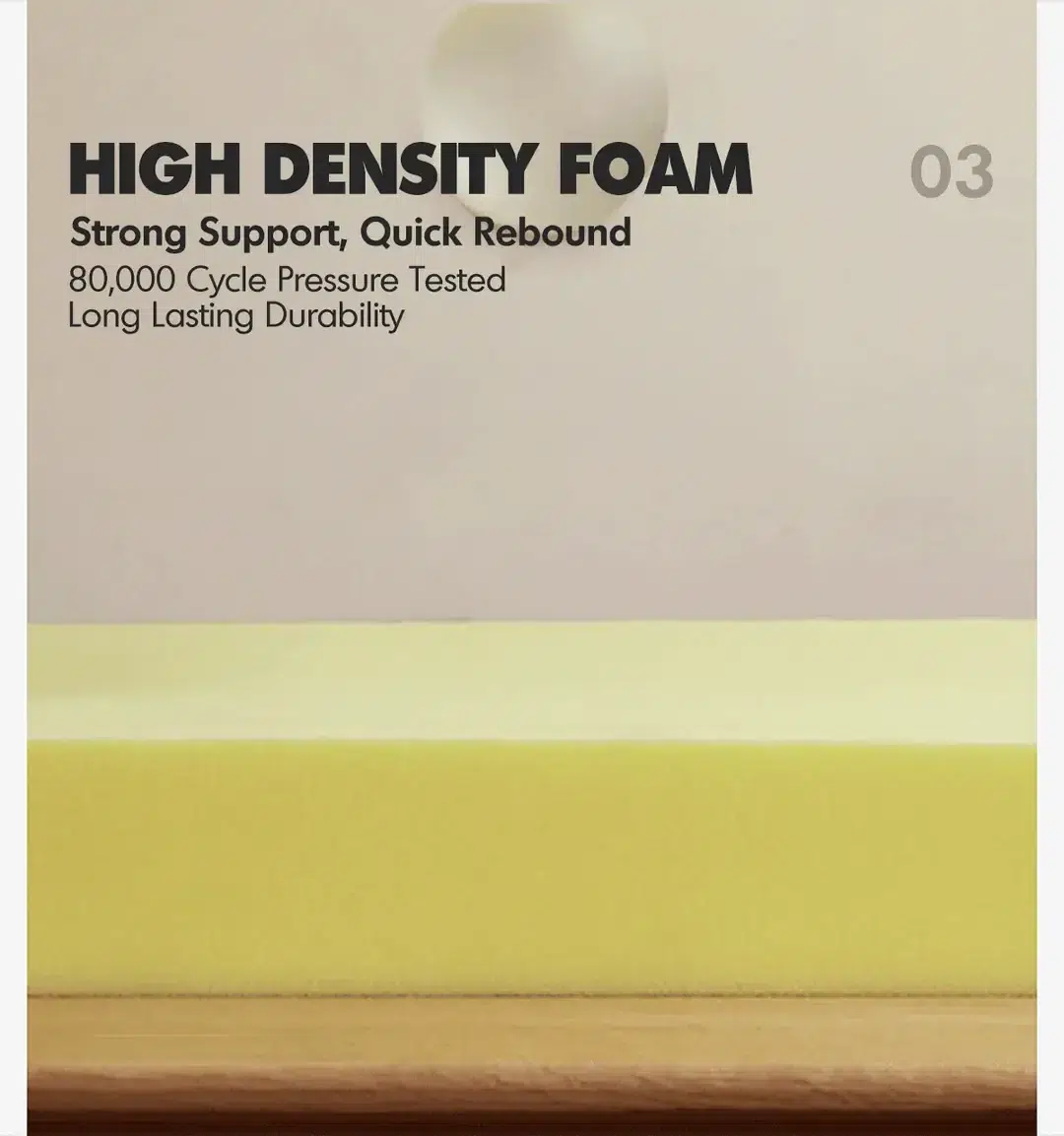
Shredded Foam (45D High-Resilience): High-density foam possesses “molecular memory.” It can be compressed thousands of times and still return to its original geometric shape.
The Verdict: If your brand promise is “Lifetime Durability,” foam is the only logical choice. If you prefer a recurring revenue model through refills, EPS is the industry standard.
2. Logistics & Volumetric Efficiency: Shipping Air vs. Shipping Value
EPS Beads: Non-compressible. You are essentially paying to ship air across the ocean. This significantly inflates your Landed Cost (DDP) and reduces your container ROI.
Vacuum-Compressed Foam: This is the “Game Changer.” High-quality foam can be vacuum-sealed to 1/4 of its original size. Our engineering achieves a 17% higher volumetric efficiency compared to standard imports.
The Verdict: For buyers in Australia, the UK, or the UAE facing high freight rates, compressed foam transforms logistics costs into net profit.
3. User Experience: The “Noise” Factor and Tactile Premium
EPS Beads: They produce a distinct “rustling” or “hissing” sound when the user moves. The feel is firm and “plastic-like.”
Shredded Foam: It offers a silent, “cloud-like” enveloping experience similar to high-end designer sofas. It contours to the body without the friction noise of plastic beads.
The Verdict: For Luxury Lounging or Sensory-Friendly furniture lines, foam provides a tactile premium that justifies a higher retail price point.
4. Safety & Environmental Integrity: The “Zero-Stone Powder” Standard
EPS Beads: Being micro-plastics, they pose an environmental risk if the inner liner breaks. They also carry a static charge that can make cleanup difficult.
Pure Foam (Zero-Filler): Lower-grade foams often contain “stone powder” to fake density, which leads to “internal dusting” (powdering) over time. Our 45D Pure Foam is 100% polymer-based, meeting strict REACH and BS5852 standards.
The Verdict: Compliance-heavy markets like the EU and UK demand the chemical purity and non-toxic profile of high-grade pure foam.
5. Usage Scenarios: Outdoor Versatility vs. Indoor Luxury
Outdoor & Poolside: EPS is the undisputed king here. Its closed-cell structure is hydrophobic (water-resistant) and offers immense buoyancy, making it perfect for floating bean bags.
Indoor & Conservatory: Foam is superior for indoor comfort. However, in high-heat environments like a UK conservatory or a Dubai sunroom, only “Zero-Stone Powder” foam can resist thermal degradation and sagging.
The Verdict: Choose EPS for water-based activities and Foam for high-end residential or commercial interiors.
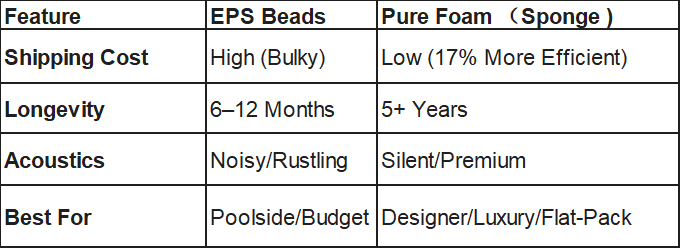
If your business model relies on D2C (Direct-to-Consumer) shipping or high-end retail, switching to a compressed foam logic is the most effective way to lower your overhead and elevate your brand equity.