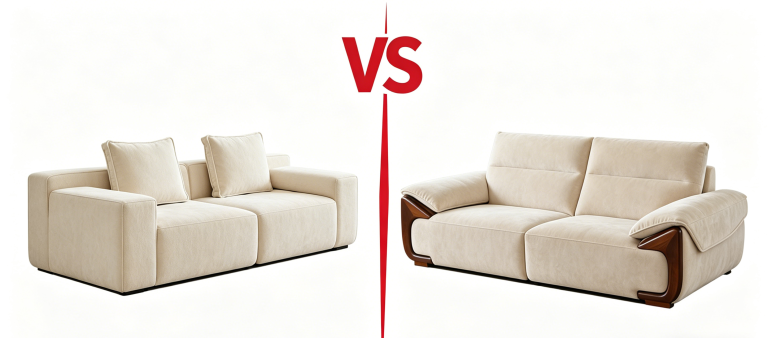
In the current global furniture market, a clear divide has emerged between two distinct manufacturing sectors. As a global sourcing manager or furniture wholesaler, your next inventory decision will define your profitability: should you stick to traditional, bulky luxury sofas, or pivot to the high-volume, modern compressed sofa segment?
Understanding the logistics, material durability, and market demand of each sector is essential before launching your next collection.
1. The Traditional Sofa Market: High-End but High-Logistics Cost
Traditional pre-assembled sofas have long defined the premium, high-end investment market. For buyers catering to luxury residential projects or consumers with significant budgets, these pieces offer undeniable advantages:
Timeless Aesthetic: They deliver a classic structural presence that anchors large spaces.
Engineered Durability: High-quality traditional sofas provide stable support for over 10 years, making them a long-term investment for high-net-worth customers.
The B2B Bottleneck: However, from a supply chain perspective, traditional sofas are a logistical nightmare. They consume massive container space (CBM), leading to skyrocketing ocean freight costs per unit and a heavily restricted warehouse footprint for distributors.
2. The Rise of Compressed Sofas: Maximizing Efficiency and Freight ROI
In contrast, the “sofa-in-a-box” market focuses entirely on efficiency, logistics optimization, and agility. This sector perfectly targets modern urban living, apartment dwellers, and e-commerce platforms (like Amazon and Wayfair) where fast shipping is mandatory.
Logistically, the compressed foam sofa model is an absolute game-changer for B2B global sourcing:
Logistics Impact: You can fit 3 to 4 times more units into a single 40HQ shipping container compared to traditional pre-assembled options. This leads to a massive, direct reduction in ocean freight costs per unit, inflating your profit margins.
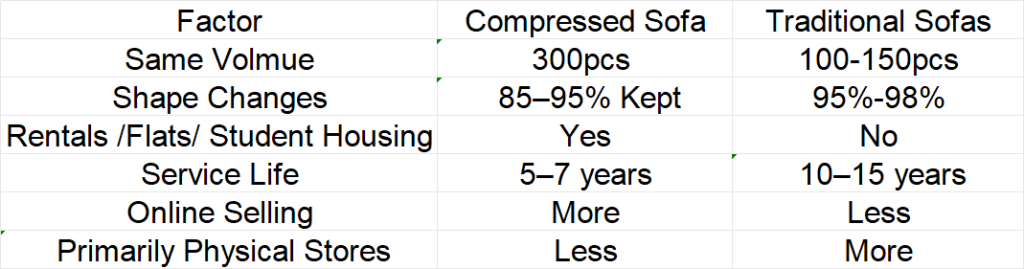
3. Comparing the Specs: Logistics & Performance Data
To help you make an informed procurement decision, here is how the two sectors compare in data:
4. Addressing the Quality Gap: How to Overcome the “Shape Loss” Perception
Many industry reports indicate a common struggle: entry-level compressed sofas may lose 85% to 95% of their structural shape over time, resulting in an inconsistent sitting experience due to cheap, low-density raw materials.
How to solve this for your brand? The answer lies in premium foam engineering.
To successfully scale a high-volume compressed furniture brand without sacrificing reputation, your manufacturing partner must utilize high-density, high-resilience sponge (typically 35kg/m³ or above). Advanced vacuum-compression technology ensures that even after months of transit in a sealed box, the sofa achieves instant, flawless shape recovery within hours of opening, matching the structural integrity of traditional variants.
5. Making the Strategic Choice for Your 2026 Roadmap
Ultimately, your business direction depends on your core customer base and sales channels:
Are you aiming for a lifetime heirloom that demands a slow-turning, high-price-tag model?
Or are you building a high-volume, agile, and e-commerce-friendly brand designed for modern urban living and optimized logistics?