Choosing the Right Foam Furniture for Different Milestones
The market demand for soft furniture spans multiple age groups, as the ergonomic and safety benefits scale with a child’s developmental milestones.
Early Intervention and Core Strength
For infants and young toddlers learning to pull up, stand, and cruise, safety is the top priority. Parents looking for a play couch for 1 year old are essentially investing in a soft-landing zone. The low-to-the-ground, firm foam wedges help infants build core strength and bilateral coordination without the risk of hitting sharp wooden edges or hard plastic corners.
Advanced Motor Planning for Preschoolers
As children grow, their need for complex movement increases. By ages 3 to 5, kids need to practice dynamic balance and risk assessment. Providing them with a modular play couch with slide or an expandable kids foam play blocks set allows them to engineer their own obstacle courses. This kind of active, full-body engagement helps drain excess energy, directly leading to better sleep and improved emotional regulation later in the day.
Conclusion: A Growing Market Backed by Science
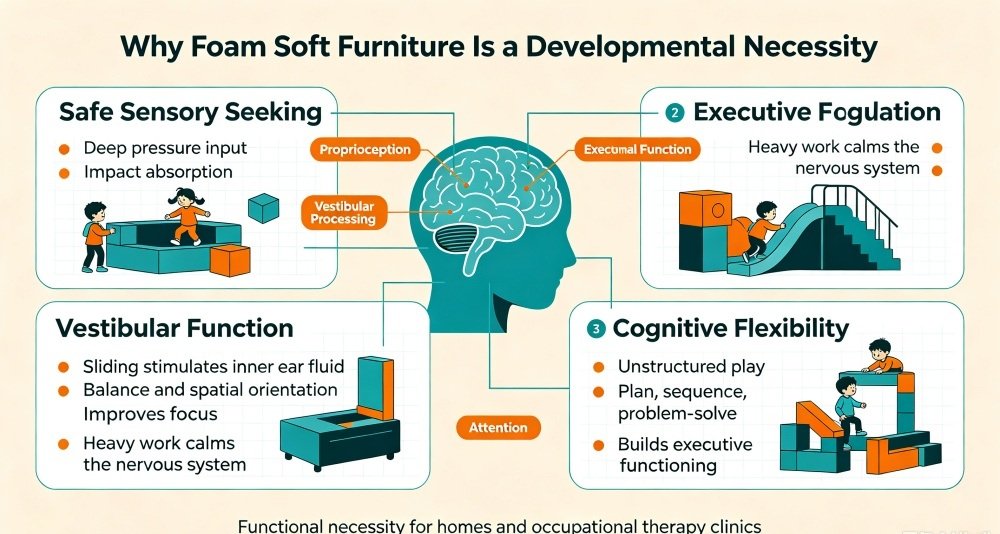
The market for children’s foam soft furniture is not a fleeting fad; it is a permanent shift in how we approach early childhood development. By bridging the gap between stylish home decor and clinical-grade occupational therapy tools, foam play couches have become a necessity for modern parenting.
For children with ASD or ADHD, these products are not just toys—they are essential tools for self-regulation, deep-pressure therapy, and safe sensory exploration. As more parents and educators become aware of the neuroscience behind sensory regulation, the demand for high-quality, non-toxic, and versatile foam climbing toys for toddlers will continue to dominate the global market.